
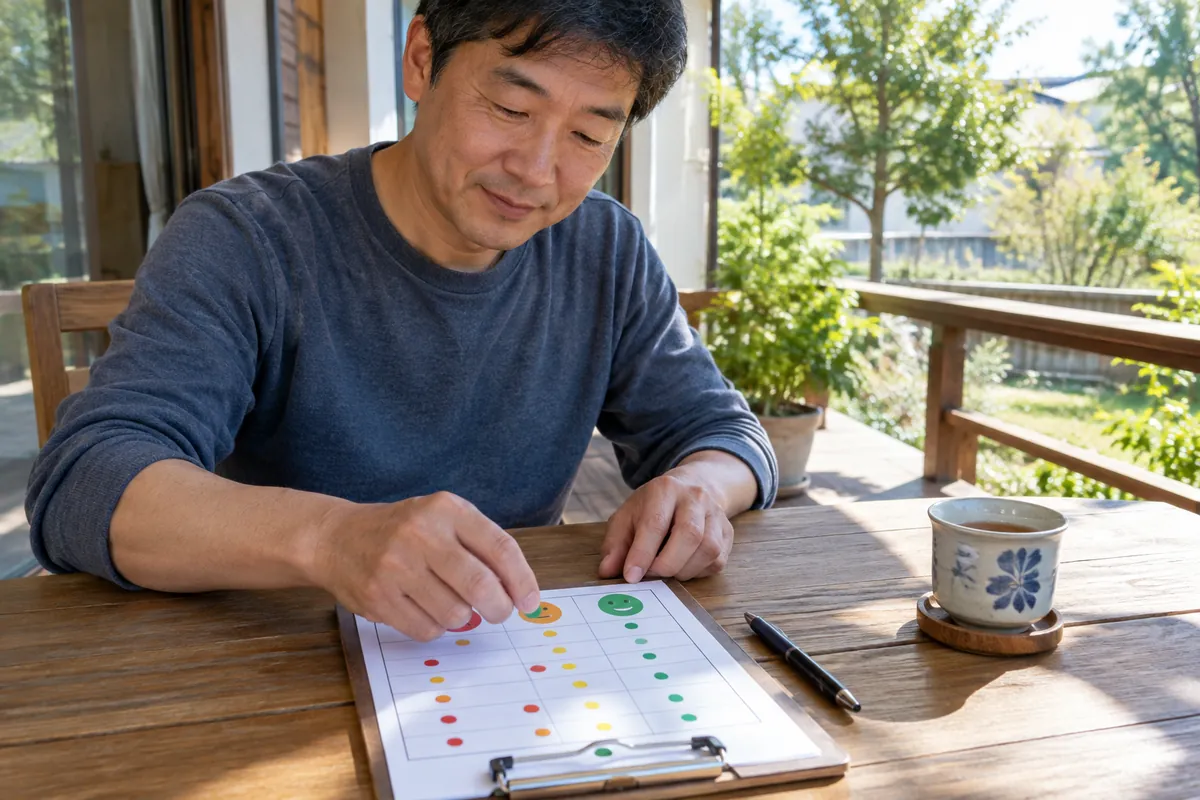
You can use an AI chatbot for far more than venting: you can practice difficult conversations, track your mood and patterns, learn and rehearse new coping skills, and prepare for therapy sessions. These uses work best as a complement to professional care, not a replacement for it. Think of AI chat as a private rehearsal space where you can build self awareness and practical skills at any hour.
Why Venting Is Only the Beginning
Venting feels good in the moment because it releases pressure. You say the thing that has been circling in your head, and the chatbot responds with something calm. But venting alone often keeps you in the same loop. You describe the problem, feel a little lighter, and then the same thought returns tomorrow.
The more useful question is what you do after you vent. An AI chatbot can help you move from repeating the story to examining it. You can ask it to help you notice what keeps showing up in your words, or to slow down and look at one specific moment you keep describing. That shift from release to reflection is where the other uses begin.
How Can I Practice a Difficult Conversation?
You can use an AI chatbot as a conversation partner before you talk to a real person. This is helpful when you need to say something uncomfortable to a partner, a parent, a friend, a roommate or a coworker.
A practical way to start is to tell the chatbot the situation in a few sentences. Then say something like: "Play the role of my manager and respond the way you think she might." You can then practice what you want to say, see how it lands, and try again.
What makes this useful is the ability to revise without consequences. You can say the blunt version first, notice that it sounds harsh, and soften it. You can ask the chatbot to respond as someone who is defensive, or someone who is hurt, and practice staying calm. The goal is not to script a perfect speech. The goal is to find words you can actually say out loud and to feel less surprised by the other person's reaction.
After a few rounds, you might notice your shoulders tense up when the chatbot pushes back. That is useful information. It tells you which part of the real conversation will be hardest for you.
Can an AI Chatbot Help Me Track My Mood and Patterns?
Yes, but the value comes from what you do with the record. You can use an AI chatbot as a daily check in. Instead of writing "fine" in a journal, you can describe what actually happened and how you felt in plain language.
Over time, you can ask the chatbot to help you look back. For example: "Based on what I have told you this week, when did my mood dip?" or "What did I say before the last three times I felt really low?" The chatbot can reflect patterns in your own words back to you. You might notice that your hardest evenings follow days when you skip lunch, or that you feel most anxious after checking email before bed.
This is not a diagnostic tool. It is a mirror made of your own sentences. If you want a more structured view, you can also use mood insights to spot trends over time. The chatbot helps you describe the pattern; the record helps you see it.
What Coping Skills Can I Learn With an AI Chatbot?
You can learn and rehearse specific skills that therapists commonly teach. The chatbot can walk you through them step by step, and you can practice in the moment when you feel overwhelmed.
A few concrete examples:
- Cognitive reframing. You can describe a thought that is bothering you, such as "I ruined the whole project." The chatbot can help you examine the evidence for and against that thought and try a more balanced version. This is a core idea in cognitive behavioral therapy.
- Grounding exercises. You can ask the chatbot to guide you through a 5 4 3 2 1 exercise, where you name things you can see, touch, hear, smell and taste. It can talk you through it one sense at a time.
- Diaphragmatic breathing. You can ask for a slow breathing exercise with a count, and follow along. The American Psychological Association explains how this kind of practice affects the body's stress response.
- Distress tolerance. You can ask for a short list of things to do in the next ten minutes when you feel like acting on an impulse you will regret. The chatbot can help you make a plan for right now, not for someday.
The key is to practice these skills when you are only mildly stressed, not just in a crisis. That way the skill is available when you really need it.
How Can I Prepare for My Therapy Session?
Many people arrive at therapy with a vague sense that the week was hard but no clear memory of what happened. An AI chatbot can help you gather the threads before you sit down with your therapist.
You might spend ten minutes the night before a session telling the chatbot what stood out during the week. Then you can ask it to help you summarize: "What are the three things I mentioned most often?" or "What question do I most want to ask my therapist?"
You can also use the chatbot to test whether a topic feels ready to bring up. Saying something hard to a chatbot first can reduce the surprise of saying it to a person. You are not replacing the therapist. You are doing the preparation that makes the session more focused.
This is especially useful if you tend to freeze in sessions or spend the first twenty minutes deciding what to talk about. A short list you made with the chatbot can give you a starting point.
How Is This Different From AI Therapy?
You may have searched for "AI therapy" or "AI therapist" because you want support without the friction of scheduling or cost. It is important to be clear about what an AI chatbot is and is not.
An AI chatbot is not a therapist. It does not give therapy, diagnose conditions, treat disorders or cure anything. Therapy is what licensed clinicians provide. AI chat is a support tool you can use alongside professional care, or on its own for everyday reflection and skill practice.
The distinction matters for your safety. A chatbot can help you rehearse a conversation or notice a pattern, but it cannot assess risk, understand your full history or make clinical decisions. If you are experiencing symptoms that interfere with your life, consider speaking with a qualified professional. The National Institute of Mental Health has a clear overview of psychotherapies and what they involve.
What Should I Do If I Need More Than a Chatbot?
AI chat can be a useful nightly check in or a place to practice skills, but there are times when you need a human. If you feel unsafe, if you are having thoughts of harming yourself, or if you are in crisis, reach out to a person right away. You can contact the 988 Suicide and Crisis Lifeline by calling or texting 988 in the United States. It is available 24 hours a day.
If you are struggling with symptoms that have lasted for weeks, that affect your sleep or appetite, or that make it hard to work or care for yourself, consider talking with a doctor or therapist. The National Alliance on Mental Illness offers help finding support, and the National Institute of Mental Health has information about anxiety disorders and depression.
If you are in an abusive relationship, contact The National Domestic Violence Hotline. If you have experienced sexual violence, RAINN provides confidential support.
When to Move Beyond AI Chat
You will know it is time to move beyond the chatbot when the same topics keep returning and you feel stuck despite your practice. That is not a failure. It is a signal that you may benefit from a human perspective.
Another sign is when your distress feels too immediate for reflection. If you are in the middle of a panic attack or a spiral, a chatbot can offer grounding steps, but a human voice or a crisis line may be more effective. Use the tool that matches the moment.
Finally, if you find yourself hiding the chatbot use from people who care about you, or using it as a reason not to seek human support, pause and reconsider. AI chat works best when it is one part of your support system, not the whole system.
You can use an AI chatbot for far more than venting. Practice a hard conversation, track what you notice, learn a skill, prepare for therapy. Let it be a useful room you step into, not the only room you live in.