
The Sunday scaries
Why Sunday, specifically
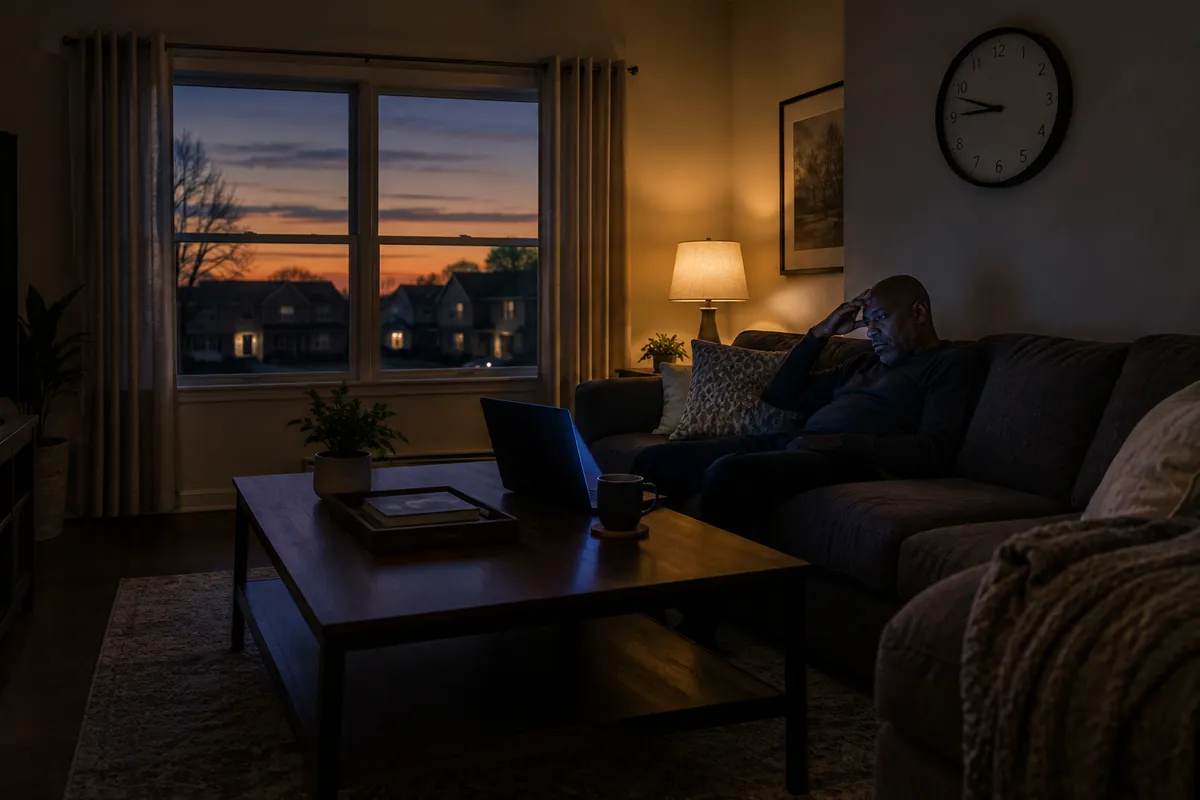
Anxiety is a forecasting system. It is not reacting to your Sunday; it is reacting to your Monday, and Sunday afternoon is roughly the moment the forecast becomes vivid enough to feel. Before that, the weekend still has enough runway to feel open-ended. Somewhere around four in the afternoon the maths changes, and the unread inbox, the conversation you are dreading, and the thing you said you would have finished all become tomorrow's problems rather than next week's.
Two other things stack on top. Weekends usually break the sleep and light routine that keeps your body clock steady, so Sunday evening finds you slightly jet-lagged and worse at regulating emotion. And unfinished work is unusually sticky in memory — an open loop keeps surfacing in a way a closed one does not, which is why the task you half-did on Friday afternoon is the one that visits you at bedtime.
What it feels like
It is rarely just a mood. Anticipatory anxiety is physical, and recognising the physical part as anxiety rather than illness is often the first thing that helps.
- A tightening in the chest or stomach that starts mid-afternoon
- Irritability with the people you are actually enjoying your weekend with
- Mentally rehearsing Monday on a loop, without ever reaching a conclusion
- Difficulty falling asleep, then waking early anyway
- Scrolling or drinking to keep the evening from proceeding
- A flat, pre-emptive dread that arrives before any specific thought does
What actually helps
Most advice about the Sunday scaries tries to distract you out of them, which works for about twenty minutes. What works better is closing the loops that are generating the forecast, and giving Sunday evening something of its own to be.
- Spend the last fifteen minutes of Friday writing down where everything stands and what Monday starts with — by far the highest-leverage change, because it closes the open loops before the weekend begins
- Put something you actually like on Sunday evening. Dread expands into empty time; an appointment with a friend, a class, a standing show gives it a boundary
- Write the worry down rather than rehearsing it. Rumination continues indefinitely because thinking never reaches an endpoint; a written list does
- Ask what specifically you are dreading. "Monday" cannot be solved. "The 10am with my manager" can be prepared for in ten minutes
- Keep Sunday’s wake time within an hour of a weekday, which does more for Sunday night’s sleep than anything you do at bedtime
- Get outside in daylight on Sunday morning — it steadies the body clock the weekend has drifted
- Notice the alcohol trade. A Sunday drink softens the evening and costs you the sleep, which makes Monday worse and next Sunday more frightening
When it is the job, not the anxiety
There is a real difference between anticipating a week you find hard and dreading a place that is doing you harm, and coping skills applied to the second are just a way of tolerating something you should be changing. Sunday dread that is mild, general, and eases by Monday mid-morning is ordinary. Dread that is severe, focused on specific people, spreading backwards into Saturday, or accompanied by physical symptoms on Monday morning is data about the job.
It is worth asking plainly: if I moved to the same role somewhere else, would this feeling come with me? People usually know the answer, and often have known it for months.
When to take it further
Sunday scaries are not a diagnosis. But dread that has stopped being confined to Sunday, that comes with panic symptoms, or that has flattened your interest in things you used to enjoy has moved beyond the weekly cycle and is worth taking to a professional. Cognitive behavioural therapy is the best-evidenced treatment for anticipatory anxiety and tends to be short — often a matter of a few months rather than years.
Frequently asked questions
Are the Sunday scaries a real thing?
Why do I get them even when I like my job?
What is the single most effective thing to change?
How do I know when it is more than the Sunday scaries?
Sources
- Stress effects on the body— American Psychological Association (APA)
- Sleep and Sleep Disorders — Tips for Better Sleep— Centers for Disease Control and Prevention (CDC)
- What is Cognitive Behavioral Therapy?— American Psychological Association (APA)
Related
Start feeling a little lighter — free
Talk to Wellzy's AI for support with anxiety, stress, low mood, and sleep. A free account is all you need to begin — no credit card — and a free tier you can keep using.