
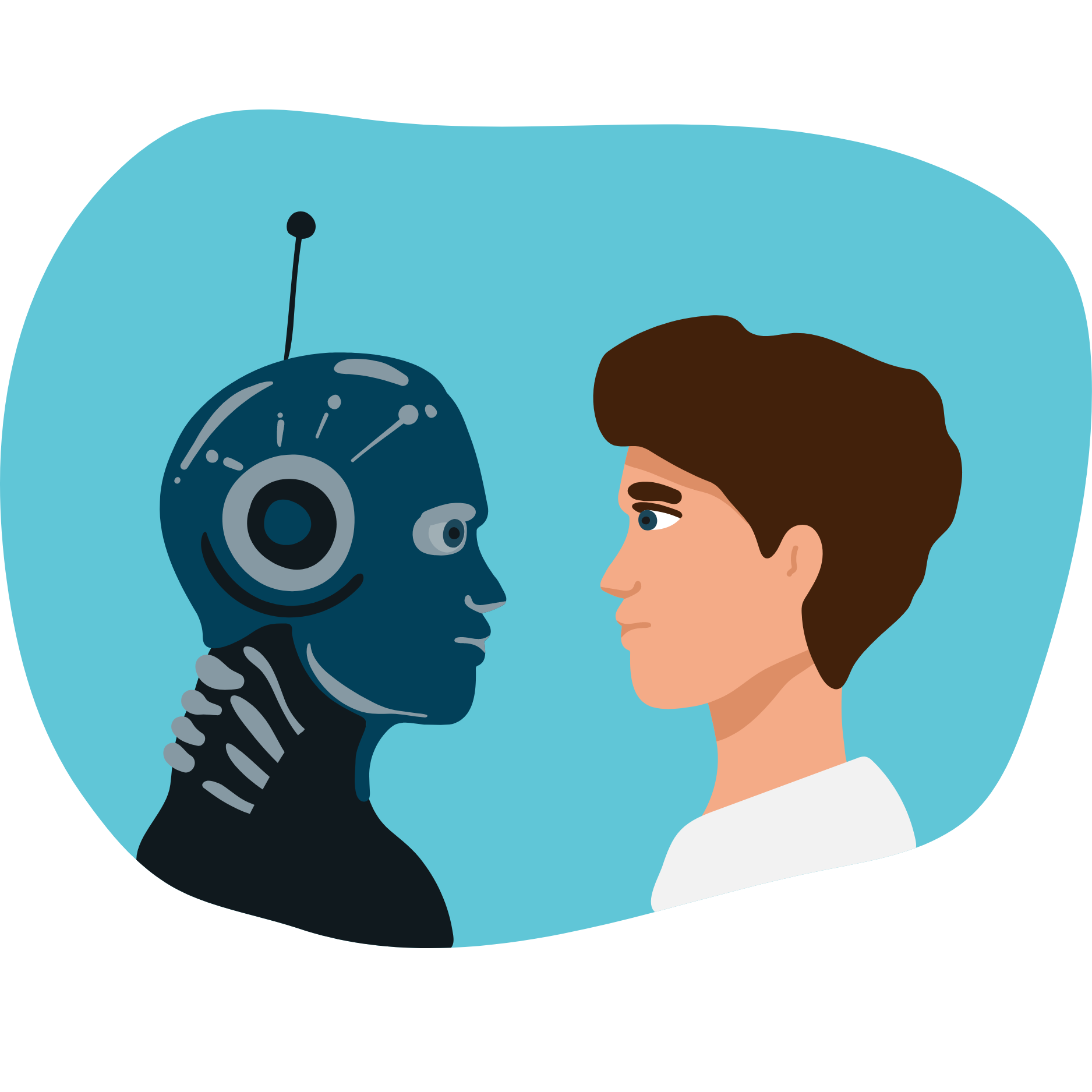
The main risks of using an AI chat app for mental health are that your private thoughts may not be as protected as you assume, the app can miss serious warning signs that a human would catch, and it can give generic advice that does not fit your situation. AI chat can be a useful place to vent or practice a skill, but it is not a substitute for a licensed therapist, and it can be actively unsafe if you are in crisis or dealing with a condition that needs professional care.
Who can see what I type into an AI chat app?
This is the first thing to check, and most people never check it. An AI chat app is a software product, not a therapist's office. The conversation you have may be stored on company servers, used to train future versions of the model, reviewed by human moderators, or shared with third party vendors. The legal protections that apply to a therapist's notes often do not apply to an app.
Read the privacy policy before you share anything you would not want a stranger to read. Look for concrete statements about whether conversations are encrypted, how long they are kept, whether they are used for training, and when they might be shared. If the policy is vague or hard to find, treat that as a warning. A good rule is to avoid typing your full name, workplace, address, or identifying details about other people. You are not being paranoid. You are being careful with sensitive information in a system that may not be designed to protect it.
Also remember that many chat apps are not covered by HIPAA, the US law that protects health information in certain medical settings. Do not assume that because an app feels private, it is legally protected. If you would not post it publicly, think twice before typing it.
What can an AI chat app miss that a human would notice?
An AI responds to the words you give it. A human clinician responds to much more: your tone, your pace, what you avoid saying, your body language, your history, and the context you may not even know is relevant. An AI can read the sentence "I can't do this anymore" and offer a supportive reply, but it cannot hear how you said it or know whether this is a passing frustration or a plan.
This is the gap people mean when they talk about lack of human judgment. An AI does not have judgment. It has patterns. It looks for words and phrases it has seen before and produces a response that seems plausible. That can feel helpful in the moment, but it can also miss the difference between a bad day and a serious depressive episode, between ordinary stress and a trauma response, between a vent and a cry for help.
An AI may also take you too literally or not literally enough. If you say "I feel like I'm drowning," a human knows you probably mean it as a metaphor for being overwhelmed. An AI may respond with generic advice about breathing exercises. That is not harmful on its own, but it can feel dismissive when what you needed was to be understood.
When is an AI chat app not enough?
AI chat is not enough when you are in crisis, when you are having thoughts of harming yourself or someone else, when you are hearing voices or experiencing delusions, when you are unable to get out of bed for days, when you are using substances to cope, or when your distress is getting worse instead of better. In those situations, an app cannot keep you safe.
If you are thinking about suicide or feel you might hurt yourself, call or text 988 in the US to reach the 988 Suicide and Crisis Lifeline. If you are experiencing domestic violence, you can contact the National Domestic Violence Hotline. If you have experienced sexual assault, RAINN offers confidential support. These are real services with trained humans on the other end.
AI chat is also not enough if you have a mental health condition that has not been evaluated by a professional. An app cannot diagnose you. It cannot tell you whether you have depression, an anxiety disorder, PTSD, or anything else. Only a qualified clinician can do that. If you have been feeling off for weeks, if your sleep or appetite has changed, if you are withdrawing from people, or if you just have a sense that something is wrong, that is worth discussing with a doctor or therapist. The National Institute of Mental Health has a plain language guide to psychotherapy that explains what to expect.
How can I use an AI chat app safely?
You can use an AI chat app safely if you treat it as a supplement, not a replacement. Here are some concrete ways to do that.
- Use it for specific, narrow tasks. An AI chat can help you rehearse a difficult conversation, break a large task into smaller steps, or write down what you are feeling before a therapy session. It is a thinking tool, not a treatment.
- Keep a human in the loop. If you are working with a therapist, tell them you use an AI chat app and what you use it for. They can help you notice when it is helping and when it is making things worse.
- Do not use it for emergencies. Program the crisis numbers above into your phone. If you feel unsafe, call a human. An AI is not an emergency service.
- Limit what you share. Use a nickname or no name. Do not enter contact details, financial information, or anything that could identify you if the data is leaked or sold.
- Check in with yourself after using it. Do you feel calmer, or do you feel more stuck? If the app repeatedly gives you advice that feels hollow or wrong, that is information. Stop using it for that purpose.
What does AI chat actually do well?
It is worth being fair here. AI chat can be genuinely useful in the right role. It is available at 3 a.m. when no one else is. It never gets tired of listening. It can help you name a feeling when your mind is too foggy to find the words. It can walk you through a grounding exercise, suggest a sleep routine based on established advice from sources like the CDC's sleep hygiene guidance, or help you practice a technique you learned in therapy, such as cognitive behavioral strategies described by the American Psychological Association.
Some people use AI chat as a journal that talks back. Others use it to rehearse what they want to say to a partner, a boss, or a therapist. These are legitimate uses. The key is that the AI is helping you organize your own thoughts, not replacing a clinician's judgment.
If you are curious about what the research says on whether AI chat works as a mental health tool, read our article Does AI Therapy Actually Work?. It walks through what the evidence does and does not show.
How do I find the right balance?
The right balance is different for everyone, but it usually looks like this: AI chat is one small tool in a larger kit. The larger kit includes sleep, movement, time with people who know you, and professional help when you need it. If AI chat is your only source of support, that is a sign to reach out to a human.
Start by asking yourself what you actually need in the moment. If you need to vent, an AI can listen. If you need to understand a pattern in your life, a therapist is better. If you need to know whether your anxiety is normal or something more, see a doctor. If you need someone to tell you that you matter, the AI can say the words, but a friend, a family member, or a support group can make you feel it. The National Alliance on Mental Illness offers a help line and local support groups that connect you with real people who have been through similar struggles.
Use AI chat the way you would use a notebook or a self help worksheet. It can help you sort your thoughts. It cannot carry the weight of your mental health. That belongs to you, with support from people who are trained and licensed to provide it.