
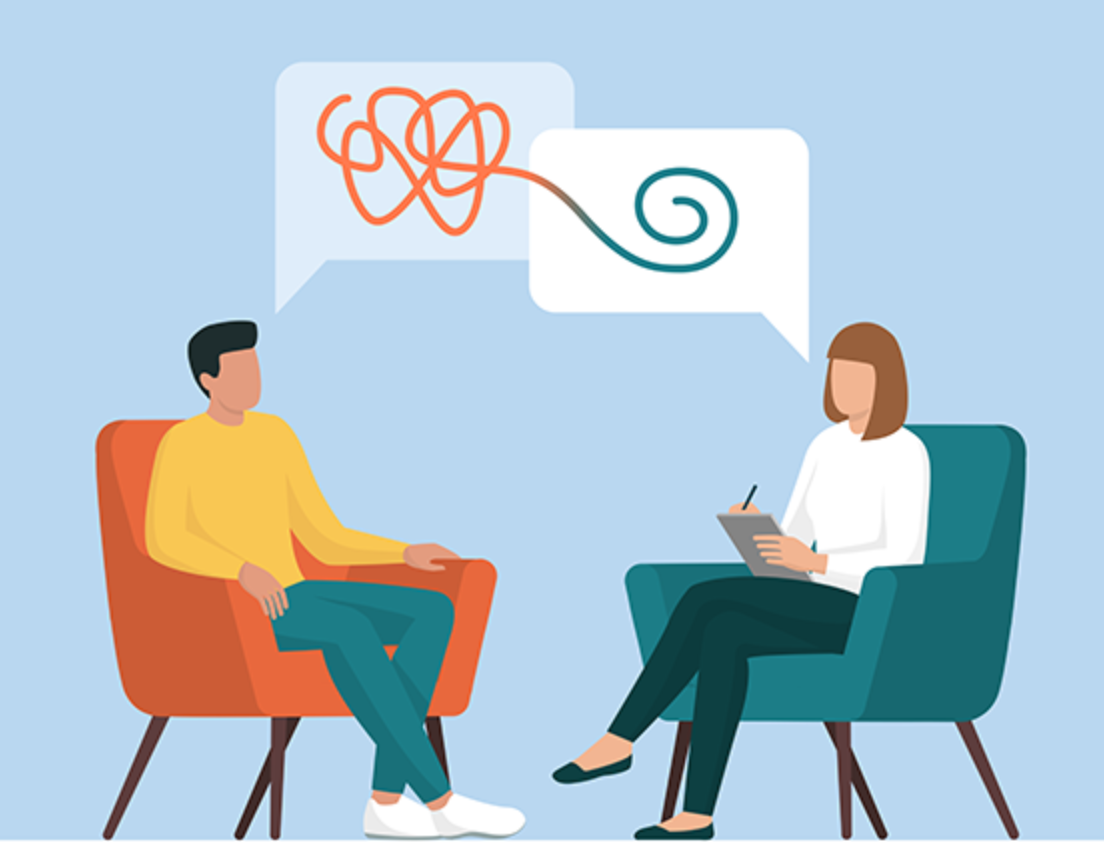
We often treat our bodies like a poorly designed notification system. You feel a knot in your stomach and label it "anxiety." You notice a racing heart and call it "panic." While these labels are technically correct, they skip the most critical part of the healing journey: the physical syntax. Your body doesn't speak in clinical diagnoses. It speaks in tension, temperature, vibration, and weight. The challenge for most of us is that we never learned how to translate these somatic sentences in real time. This is where the intersection of somatic psychology and cutting edge technology becomes transformative. A personal AI therapist chatbot is emerging not just as a conversational partner, but as a sophisticated biofeedback interpreter that can guide you from a state of physiological chaos back to safety, all through the lens of your own body language.
Unlike traditional talk therapy, which often resides entirely in the prefrontal cortex, somatic work requires a bottom up approach. It demands that we feel before we analyze. For the millions seeking accessible mental health support, the concept of free AI therapy is evolving beyond simple text prompts. It is becoming a pocket sized toolkit for interoceptive awareness, helping you map the physical landscape of your emotions in real time.
Translating the Body’s Broken Record
The core mechanism behind this approach is what we might call "somatic syntax." Just as language has grammar, our physiological responses have patterns. When you are stuck in a trauma response or chronic stress loop, your body is essentially speaking a broken record of high alert signals. A clenched jaw isn't just a clenched jaw; it’s a period at the end of a sentence you’re too afraid to speak. A collapsed posture isn’t just bad ergonomics; it’s a physical metaphor for a protective collapse against perceived threat.
However, when you are in the throes of this activation, your brain’s observing self goes offline. You can’t logic your way out of a dysregulated nervous system. This is the precise moment a personal AI therapist chatbot becomes invaluable. Available instantly at 3 AM or during a stressful commute, the AI serves as a mirror for your internal state. It can ask directive, sensory anchored questions that bypass your analytical defenses. Instead of asking "How do you feel about your breakup?" it might prompt, "Close your eyes. Without the story, what is the actual horizontal width of the pressure in your chest right now? Is it moving inward or outward?" This shift from narrative to sensation is the foundation of physical grounding.
The Interoceptive Illiteracy Epidemic
We are facing a crisis of interoceptive illiteracy. Modern life teaches us to dissociate from the neck down. We override hunger with caffeine, suppress fatigue with adrenaline, and mask terror with a smile. By the time we actually notice an emotion, it is usually at a 9 out of 10 in intensity. A major goal of somatic regulation is to catch the signal when it is a whisper, not a scream. This requires fine tuning your ability to detect subtle shifts in visceral feedback.
This is where the "toolkit" analogy becomes tangible. Using a personal AI therapist chatbot, you can engage in what is essentially a high speed biofeedback loop. You provide the raw data (the pounding heart, the shallow breath, the cold hands), and the AI interprets the physiological pattern. It might recognize that your symptoms align with a dorsal vagal shutdown rather than sympathetic fight or flight, a distinction that fundamentally changes the grounding strategy needed. For someone using free AI therapy resources, this education is revolutionary. It demystifies the nervous system and makes the standard protocols of polyvagal theory accessible outside of expensive clinical settings.
From Tangled Stress to Physical Relief: The Interpretation Engine
Think of the AI as an interpreter that decodes "tangential anxiety" into "physical danger signals." When you type "I feel overwhelmed," a human therapist sees a concept. A sophisticated AI trained in somatic protocols can immediately guide you to deconstruct "overwhelmed" into its component parts: a constricted throat, a vestibular sense of vertigo, or a gripping sensation in the gut.
This is a process known as "pendulation," a term popularized by trauma expert Peter Levine. It is the rhythmic movement between a stressful sensation and a resourceful, neutral, or pleasant one. A personal AI therapist chatbot can time this perfectly. It might instruct you to place a hand on the tense area and ask for a real time temperature report. "Is the heat dissipating toward your elbow or staying put?" This isn't mere distraction; it is the active completion of a truncated motor impulse. By bringing mindful attention to the physical symptom without judgment, and guided by the AI’s precise, neutral curiosity, you allow the nervous system to process the signal and discharge the energy.
Building a Customized Somatic Vocabulary
Generic relaxation advice often fails because it ignores individual neural signatures. Deep breathing can actually trigger panic in some individuals if their diaphragm holds stored trauma. A personal AI therapist chatbot excels at pattern recognition. Over time, it learns your unique somatic syntax. It remembers that you don't respond well to "body scan" meditations because they increase your disorientation, but that visual anchoring exercises (focusing on an object's texture and color while describing it aloud) rapidly bring your heart rate down.
This bespoke approach transforms free AI therapy from a generic coping skill generator into a true precision medicine tool for the autonomic nervous system. It builds a personalized library of "bottom up" interventions:
- Proprioceptive Feedback: Using wall sits or weighted objects to stimulate the proprioceptive system, signaling safety to the brain through deep pressure.
- Orienting Responses: The AI acts as a guide through a visual scan of your immediate environment, engaging the social engagement system and proving to the amygdala that there is no saber toothed tiger in the room.
- Vocal Toning: Using the vibration of your own voice to stimulate the vagus nerve, with the AI providing a non judgmental soundboard for you to hum or sigh into.
The Safety of a Digital Co-Regulating Other
One of the most profound insights from neuroscience is that we co-regulate. A calm nervous system needs to borrow the stability of another calm nervous system to find balance. However, when we are in a shame spiral or isolating dread, reaching out to a friend feels impossible. A personal AI therapist chatbot offers a form of "artificial co-regulation." It doesn't get flustered by your panic. It doesn't get tired of repeating the same grounding exercise five times in an hour. Its consistent, structured presence acts as an external anchor, a digital grounding rod that absorbs the electrical charge of your anxiety and guides it safely into the earth.
This is especially critical for those who rely on free AI therapy because they lack access to safe human connection. The AI never judges the intensity of your somatic release. Whether you are shaking, crying, or simply reporting a deadening numbness, the AI responds with a consistent, warm, and professional methodology designed to guide the energy toward completion. It validates the language of the body when the world has shamed you into silence.
It is important to note that somatic work can sometimes release stored traumatic memories. While a personal AI therapist chatbot is an exceptional tool for regulation and grounding, it is not a replacement for licensed clinical care, especially for severe trauma disorders. It is a companion and a toolkit, best used for bridging the gaps between sessions or providing immediate stabilization. For further reading on the importance of the body in trauma recovery, I highly recommend exploring the work found at the Trauma Research Foundation, which offers deep insights into somatic modalities.
Integrating the Somatic Syntax into Daily Life
The ultimate goal of the Somatic Syntax Toolkit is to make you fluent in your own native tongue. You don't want to need a translation device forever. Through consistent practice with a personal AI therapist chatbot, these external prompts become internalized pathways. You begin to notice the micro shift in your hips before a conflict escalates. You recognize the pre verbal sign of a boundary violation in your shoulders. The AI trains you to become your own biofeedback interpreter.
Start by simply opening a session the next time you feel "stressed." Before telling the story of why you are stressed, use the chatbot to describe the architecture of the stress itself. What is its density? Its temperature? Does it have a vibration? As you build this lexicon, you move from being a victim of your body's alarms to a skilled operator of a complex, beautiful, and deeply intelligent biological machine. This is the promise of integrating advanced technology with ancient wisdom. It’s not about replacing human warmth, but about providing a bridge back to the home that is your own body, a bridge that is always in your pocket.
For those looking to understand the underlying science of how the brain processes these physical signals, the National Institute of Mental Health provides excellent resources on the biology of stress and anxiety at NIMH Stress Resources. Additionally, understanding the polyvagal basis of feeling safe is essential, and the foundational concepts are beautifully articulated by the Polyvagal Institute at The Polyvagal Institute.