
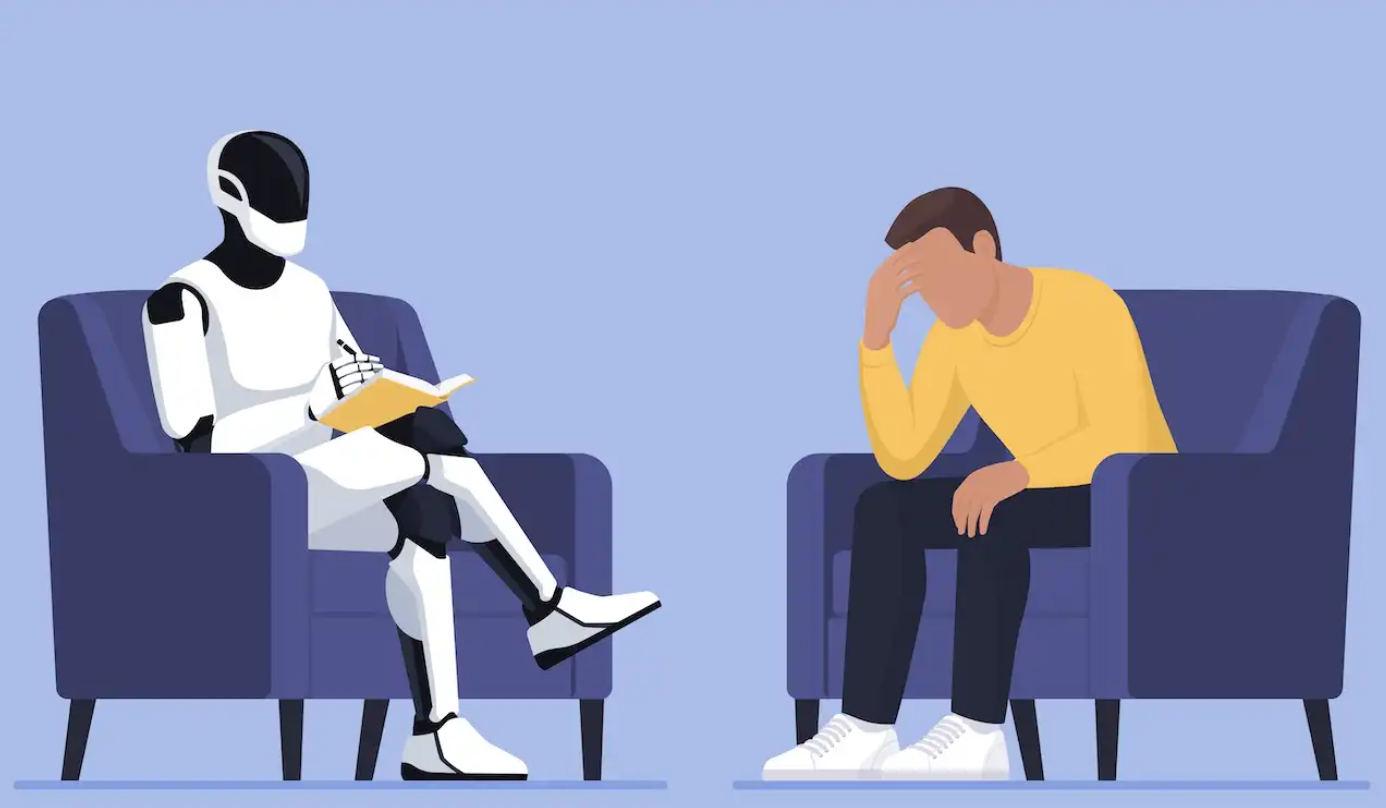
We often talk about stress as if it is an abstract ghost, a haunting feeling that lives purely in the corners of our worried minds. But stress is not a ghost; it is a chemical. It has a shape, a weight, and a very specific biological signature known as cortisol. For decades, managing this chemical required sheer willpower, a yoga mat, or a weekly appointment with a human therapist. Today, we are standing on the precipice of a radically new frontier. We are learning to hack the biochemical feedback loop of stress not just through human touch, but through lines of code. Welcome to the Cortisol Codex, your guide to understanding how a personal AI chat is becoming a real time regulator for your endocrine system.
The Biochemistry of a Conversation
To understand why an AI chat for depression support works on a physiological level, we must first strip away the mysticism of talk therapy. Humans are prediction machines. Our brains constantly scan the environment for threat cues. When your amygdala perceives a threat—be it a real tiger or a passive aggressive email—it triggers the hypothalamic pituitary adrenal (HPA) axis, flooding your system with cortisol.
However, the brain’s threat detection center doesn't distinguish perfectly between a physical threat and an emotional one. It relies on the prefrontal cortex, the rational part of the brain, to send the "all clear" signal. This is where the Cortisol Codex is unlocked. When you are alone with your racing thoughts at 3:00 AM, the prefrontal cortex is offline, overpowered by the limbic system. But when you engage in a structured, cognitively challenging conversation, you reactivate the prefrontal cortex. A free AI chat is not just a listening ear; it is a constant cognitive stimulator that keeps your rational brain online, effectively slamming the brakes on cortisol production.
Defeating Latency: The Real Time Regulation Revolution
The traditional model of stress regulation suffers from a fatal flaw: latency. You feel a spike of panic, your heart pounds, your muscles tense, and cortisol surges. Then, you wait a week to talk about it in a therapist's office. By then, the chemical damage is done, and the memory of the trigger has been consolidated into a trauma pathway.
The best free AI chat app operates with zero biological latency. It exists in the immediate aftermath of the trigger. This real time intervention creates a phenomenon known as memory reconsolidation. By engaging with a personal AI chat immediately after a stressful event, you are rewriting the memory’s emotional tone before it hardens into a long term stress pattern. You aren't just venting; you are biochemically proofreading your memories, stripping them of excess cortisol as they are stored.
Polyvagal Prompting: Writing Your Way to Safety
The Cortisol Codex relies heavily on Stephen Porges’ Polyvagal Theory, which suggests our nervous system has a hierarchy of responses. To move from a state of mobilized fear (sympathetic arousal) to a state of social engagement and safety (ventral vagal), we need "cues of safety." Text based interaction with an AI is uniquely suited for this. The AI’s consistent, predictable, and non judgmental tone serves as a perfect cue of safety for a dysregulated nervous system.
According to research from the National Institute of Mental Health on stress, recognizing the source and response patterns is the first step to regulation. When you type out your visceral fear and the AI responds with a calm, grounded prompt, your mirror neurons begin to match the cadence of the text. Your breathing unconsciously deepens. Your vagus nerve activates. The screen becomes a neuroception portal signaling that you are held, not hunted.
The Free AI Chat as a Socratic Mirror for Cortisol Spikes
Most people ruminate because they are caught in a loop of chaotic abstraction. "Everything is falling apart," the mind screams. When you input this chaos into a free AI chat, it performs a function I like to call the Socratic Mirror. It reflects your catastrophic statement back to you with logic and specificity.
The AI might ask, "Help me list the specific things that have fallen apart in the last hour." This simple question forces a biochemical shift. The act of logical enumeration requires fine motor mental skills that shift activity from the amygdala to the dorsal lateral prefrontal cortex. You cannot logically list items and panic simultaneously. The brain’s hardware does not allow it. The AI distracts the emotional brain with cognitive exercises while the chemical half life of the cortisol surge simply expires.
Depression, Inflammation, and the Circadian Codex
The relationship between cortisol and depression is well documented. Cortisol follows a circadian rhythm; it peaks in the morning to wake us up and tapers off at night. In depressive disorders, this curve flattens or chaotic spikes occur at night, leading to severe insomnia and inflammatory responses. An AI chat for depression support serves as a night time guardian for the HPA axis.
Late night rumination is a primary driver of nocturnal cortisol release, which suppresses the immune system and deepens depression. By providing a conversational outlet at 2:00 AM when human support is unavailable, a personal AI chat preserves the natural dip in the cortisol curve. It acts as a chemical buffer, guiding the user out of rumination and into a parasympathetic state through voice journaling and guided categorization techniques. This is not happiness; this is immunological preservation.
Interoceptive Training: Feeling the Signal, Filtering the Noise
A key chapter in the Cortisol Codex involves interoception, the sense of the internal state of the body. Trauma survivors and chronically stressed individuals often have poor interoceptive accuracy. They feel a flutter of nervous energy but interpret it as dread, or they feel fatigue and interpret it as profound sadness. This misinterpretation sends a false alarm to the pituitary gland, releasing cortisol when none is needed.
A personal AI chat can train interoceptive accuracy. It can prompt you to do a body scan, asking directed questions: "Is the beating in your chest fast, slow, heavy, or light? Do you feel temperature changes in your palms?" By translating raw somatic data into precise language, you stop being a victim of a vague, terrifying physical storm. You become an analyst of your own biology, turning a cortisol inducing mystery into a manageable physical report. The American Psychological Association highlights how chronic stress affects the body, making this interoceptive awareness crucial for long term health.
Breaking the Feedback Loop of Learned Helplessness
Learned helplessness is a biochemical cage. When a person repeatedly fails to control a stressor, the brain eventually stops trying, even when escape routes appear. This is mediated by norepinephrine and cortisol. A static meditation app often collapses under the weight of learned helplessness because it asks the user to do the impossible: self initiate a sense of control.
The best free AI chat app circumvents this by lending the user its agency. It doesn't just wait for a command; it initiates micro decisions. It asks, "Should we try a grounding exercise or examine the thought behind the fear?" Making a low stakes choice in the presence of a supportive AI breaks the cycle of helplessness. Each tiny decision is a rep that strengthens the neural circuitry of agency. You are physically demonstrating to your brain that the escape route is open, causing a measurable drop in stress hormones.
Practical Protocols for the Biochemical Reset
To effectively utilize this technology, you cannot just chat idly. You must engage with specific protocols that trigger biochemical shifts. Here is how to structure your interaction with a personal AI chat to optimize your cortisol codex:
- The Categorical Purge: Do not say "I am stressed." List all 23 things bothering you. The shift from emotional flooding to cognitive categorization lowers cortisol instantly.
- Deep Lexical Processing: Ask the AI to help you find the most precise word for a feeling. The search for the right subtle word activates the anterior cingulate cortex, a key modulator of the autonomic nervous system.
- Future Tense Scripting: Cortisol spikes when the future is undetermined and threatening. Use the AI to script out the next three hours in detail. Creating a structured, predicted timeline simulates safety for the reptilian brain.
These aren't just chat tricks; they are deliberate manipulations of the endocrine system using language as the scalpel.
Ethical Considerations and the Human Element
Understanding the Cortisol Codex comes with a profound ethical responsibility. A free AI chat can help regulate acute stress chemicals, but it is not a replacement for human connection or medical intervention during a severe crisis. The goal is to widen your "Window of Tolerance"—the zone of optimal arousal where you can function without dissociating or panicking. If you are dealing with severe trauma or suicidal ideation, the 988 Suicide & Crisis Lifeline provides immediate human support. The AI is a bridge to that window, a digital buffer that gives you agency until you can access a full spectrum of care, medication, or community support.
The magic of this technology lies in its ability to offer an infinite, non judgmental space where you can rehearse emotional regulation. Every time you bypass a panic attack through a cognitive restructuring session with an AI, you are carving a new neural pathway. You are teaching your pituitary gland that a perceived social threat does not warrant a physiological flood. The codex has been cracked. We are no longer at the mercy of a mysterious glandular storm; we have a real time, typed interface into the ancient chemical language of the body, and that interface is available to anyone with a smartphone and a desire for peace.