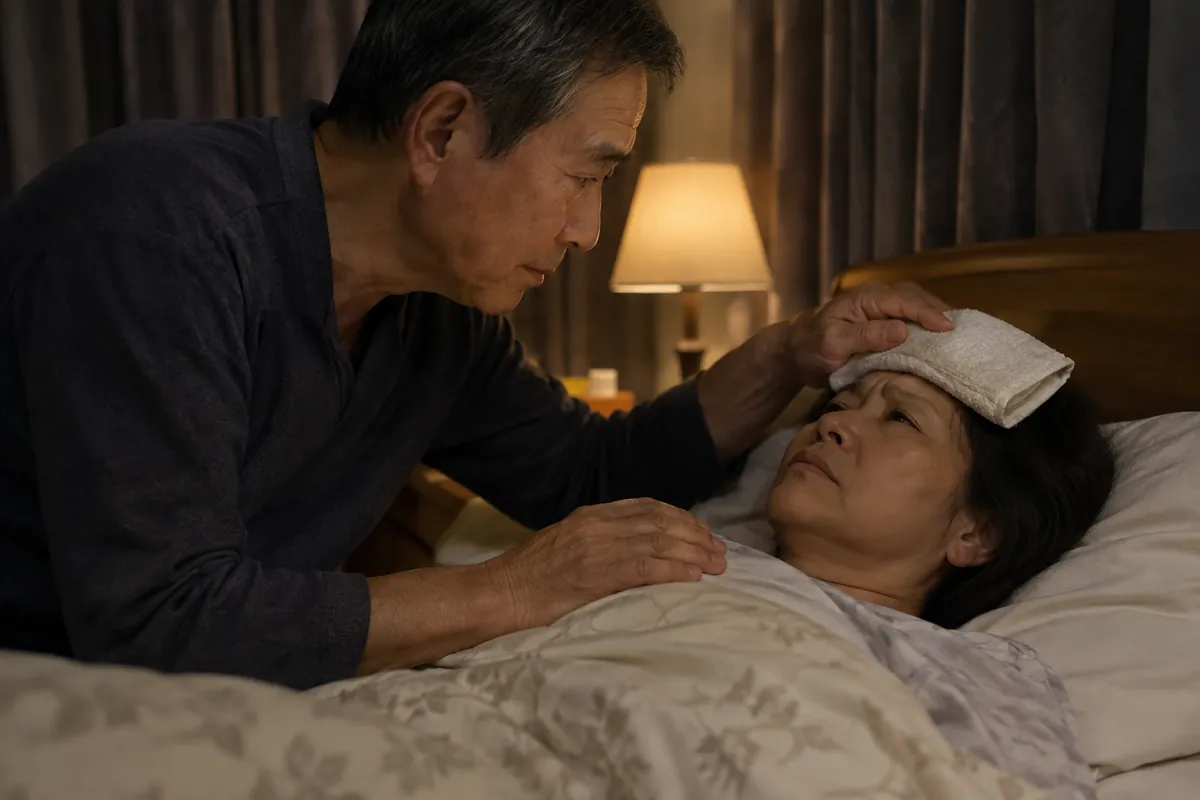
You can help your partner calm down at night by first helping their body feel safe, then listening without trying to fix the worry in the moment. Start with slow, quiet presence: sit with them, lower the lights, speak in a calm voice, and invite a few slow breaths or a grounding exercise. Once they feel less flooded, you can validate what they are feeling and, if they are open to it, gently guide them toward one small comforting action, like a glass of water, a cool cloth on the neck, or naming five things they can see in the room.
Why does anxiety get worse at night?
Nighttime anxiety often feels bigger because the distractions of the day are gone. The house gets quiet, your partner is alone with their thoughts, and the brain starts reviewing everything that could go wrong. Physical factors can add to it too: caffeine late in the day, low blood sugar, an irregular sleep schedule, or a racing heart after a stressful evening can all make the body feel on edge. When the body feels tense, the mind looks for a reason, and it usually finds one.
It may help to remember that their anxiety is not a sign that something is wrong with them or with your relationship. It is a signal that their nervous system is stuck in a state of alert. At night, without the usual input from work, screens, or conversation, that alertness has nowhere to go.
What should I avoid saying when my partner is anxious at night?
Some common responses can make nighttime anxiety worse, even when they are well meaning. Phrases like “just relax,” “there is nothing to worry about,” or “you are overreacting” tend to make a person feel dismissed. The anxious brain does not respond well to being told it is wrong. It responds better to feeling accompanied.
Also try to avoid jumping straight into problem solving. If your partner says they are worried about a work meeting, saying “just email your boss tonight” may feel practical to you, but to them it can feel like you are rushing past the fear. At night, the goal is usually not to solve the problem. The goal is to help their body come down enough that sleep feels possible.
Instead, you might say: “I can see this is really loud for you right now. I am here.” Or: “That sounds exhausting to carry. Let’s just get through the next few minutes together.”
How can I help my partner calm down in the moment?
Start with the body before the thoughts. When someone is in an anxious spiral, their breathing is often shallow and fast, their shoulders are tight, and their attention is locked on a worst case scenario. You can help by anchoring them to the present room.
Try one of these, slowly and without pressure:
- Invite them to breathe with you: breathe in for four counts, hold for four, breathe out for six. Do this together for a minute or two.
- Ask them to name five things they can see, four they can touch, three they can hear, two they can smell, and one they can taste.
- Offer a physical comfort: a cool glass of water, a warm blanket, or a gentle hand on their back if they want touch.
- Use a quiet, steady voice and say, “You are safe right now. I am right here with you.”
It can feel awkward at first, especially if you are tired too. But your calm presence is often the most effective tool in the room. You do not need to say the perfect thing. You just need to stay.
How can we create a calming bedtime routine together?
A predictable evening routine can lower the baseline of anxiety over time. The key is to keep it simple and do it together, so it feels like connection rather than another task.
You might try:
- Set a consistent wind down time, even on weekends, and lower the lights about an hour before bed.
- Put phones in another room or on a charger away from the bed. The CDC’s sleep hygiene guidance recommends keeping the bedroom quiet, dark, and relaxing.
- Do one quiet activity together: read aloud, listen to slow music, or do a short guided breathing exercise.
- If your partner’s mind is racing, keep a notebook by the bed and write down worries together. The act of putting them on paper can make them feel more contained.
- End the routine the same way each night, like a cup of herbal tea or a few minutes of gentle stretching.
The routine itself is not a cure, but it gives the brain a clear signal that the day is ending and that it is okay to slow down.
How do I validate their feelings without making the anxiety worse?
Validation means acknowledging that their feelings are real, not agreeing that the feared outcome will happen. You can say, “I understand why that thought is scaring you,” without saying, “Yes, that will probably happen.”
Useful phrases include:
- “That sounds really frightening. I can see why your mind keeps going there.”
- “It makes sense that you feel this way after the day you had.”
- “I believe you that this feels awful, even if I see the situation differently.”
Then, after they feel heard, you can gently offer a shift: “Would it help to focus on what is true right now, in this room?” This keeps you from enabling the spiral while still being kind. If your partner often jumps to the worst case, you may find our guide on What to Say When Someone Catastrophizes useful.
How can I encourage my partner to talk about what they feel at night?
Some people shut down when they are anxious because they do not want to burden you or because they cannot find words. You can make it easier by asking small, specific questions instead of broad ones. Instead of “What’s wrong?” try “What thought is loudest right now?” or “Where do you feel it in your body?”
If they are not ready to talk, do not force it. You can say, “You do not have to explain it. I will sit here with you.” Sometimes that permission to stay quiet is what lets a person open up later. For more on creating that kind of space, see How to Help Someone Open Up About Their Feelings.
When should my partner see a doctor or therapist?
Occasional nighttime anxiety is common, but it may be time to seek professional support if it happens most nights, interferes with sleep or work, or leads your partner to avoid normal activities. Other signs include panic attacks, persistent dread, or physical symptoms like chest tightness, shaking, or nausea that do not ease with calming techniques.
A doctor can check for underlying medical causes, such as thyroid issues or sleep disorders. A licensed therapist can help your partner learn skills for managing anxiety. The National Institute of Mental Health offers a clear overview of anxiety disorders and treatment options. The NAMI HelpLine can also point you toward local resources and support groups.
If your partner ever talks about wanting to die or to harm themselves, take it seriously. In the United States, you can call or text 988 to reach the 988 Suicide & Crisis Lifeline at any hour. If there is immediate danger, call 911 or go to the nearest emergency room.
What if I feel exhausted or overwhelmed too?
Supporting a partner with nighttime anxiety can be draining, especially if you are losing sleep. It is okay to say you need a break. You might agree on a plan for hard nights: “If you are not in immediate danger and I am exhausted, I will help you get settled, and then I need to sleep. We can talk more in the morning.”
You can also encourage your partner to build support beyond you. That might include a therapist, a trusted friend, a support group, or a place to talk things through when you are asleep. Some people find it helpful to have an AI chat available at 3 a.m. as a place to talk things through, practise a calming skill, or feel less alone until morning. It is not therapy, which only licensed clinicians provide, but it can be one more tool alongside professional care.
Taking care of yourself is not abandoning your partner. It is what allows you to keep showing up with patience and steadiness night after night.