
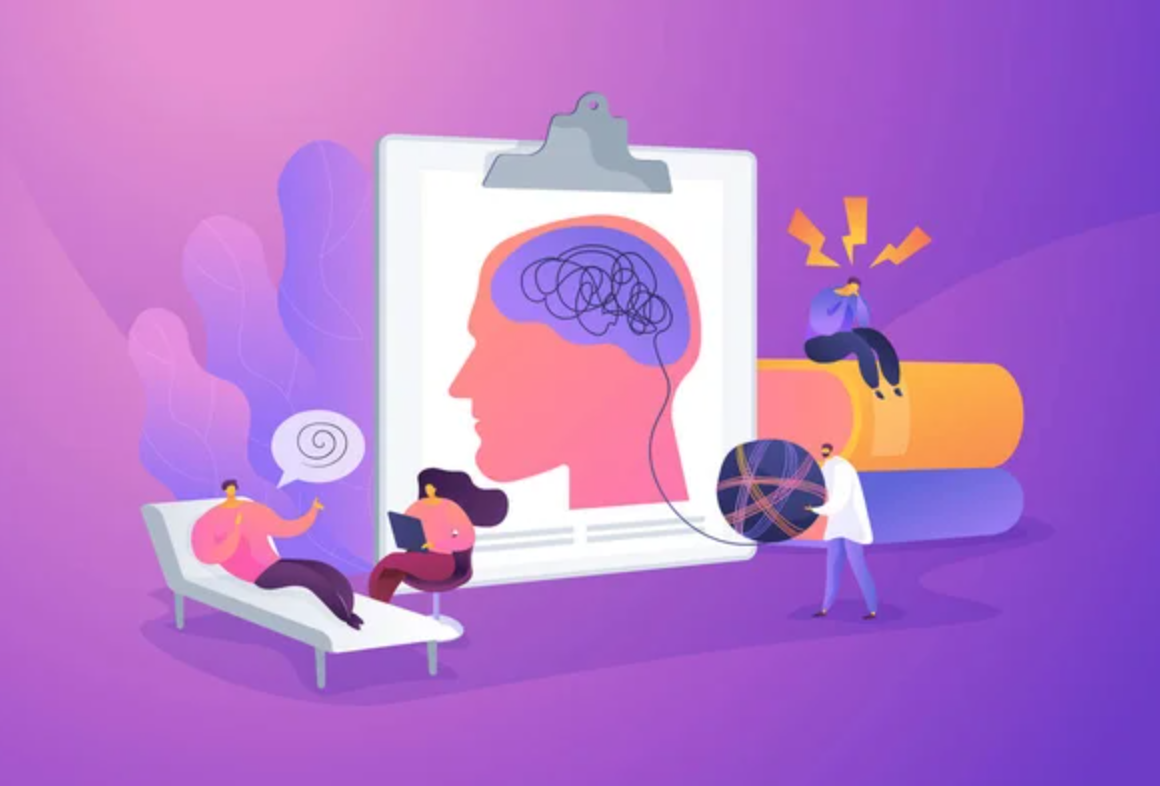
The Digital Third Place How Free AI Psychologist Platforms Are Cultivating Community Resilience and Emotional Literacy for Solopreneurs and Remote First Teams Through Shared Cognitive Restructuring Exercises
Remember the neighborhood coffee shop where the barista knew your name? Or the buzzing coworking space where a casual chat by the water cooler could spark your next big idea or simply remind you that you weren’t alone in your struggles? For the modern solopreneur and the geographically scattered remote first team, that physical third place has largely evaporated. Social interaction became asynchronous, typed out in Slack channels, and the "how are you?" greeting became a rhetorical flourish rather than a genuine check in. Yet, a fascinating evolution is taking place in the digital realm. A new sanctuary is emerging, not built on brick and mortar or even video fatigue, but on shared psychological practice. We are witnessing the rise of the digital third place powered by the free AI psychologist.
This isn’t about replacing human connection with cold code. It’s about leveraging platforms that utilize an AI therapist for stress management as a catalyst for communal healing. These spaces are pioneering a model where shared cognitive restructuring exercises turn individual emotional regulation into a collective, resilient culture. For the solo founder burning the midnight oil and the distributed team member feeling isolated behind a screen, these platforms are redefining what it means to hold space for one another.
The Collapse of Traditional Scaffolding for the Modern Worker
Before we can understand the solution, we must honestly assess the deficit. Solopreneurship is often glamorized as the ultimate freedom, but it frequently manifests as a pressure cooker of isolation. There is no boss to absorb the shock of a lost client, no HR department to mediate the anxiety of unstable cash flow. Similarly, remote first teams often operate under an "always on" expectation, where the lack of physical separation blurs the boundary between professional stress and personal identity. Traditional mental health scaffolding is often too expensive, too time consuming, or too stigmatized to access in the midst of a product launch or quarterly sprint.
We are learning that resilience isn't a solitary muscle; it’s a connective tissue. When we lack a physical third place to vent, to laugh, and to process the irrational fears that plague the creative mind, we internalize the burnout. This is where the structured, psychologically informed digital environment steps in, not just to listen, but to guide.
Reclaiming the Third Place Through Shared Algorithms
Urban sociologist Ray Oldenburg coined the term "third place" to describe the spaces where we retreat from home and work to find community. A free AI psychologist platform is increasingly functioning as this exact anchor. Unlike a private, one on one therapy session hidden behind closed doors, these platforms are introducing "group workout" models for mental fitness.
Imagine a digital forum or a dedicated team channel where the interaction isn't just free form venting, which can often spiral into collective rumination, but is structured by an AI guided exercise. The AI acts as a neutral facilitator, offering a prompt based on Cognitive Behavioral Therapy (CBT) or Dialectical Behavior Therapy (DBT). The community then engages in what we call "shared cognitive restructuring." An individual might share a distorted thought like, "If my launch flops, I’m a total failure." The AI, trained as an AI therapist for stress management, doesn't just validate the feeling; it provides a framework. It might ask the group, "How would you challenge the absolutism in this statement using data from your own recent setbacks?" The result is a collective untangling of cognitive distortions, where everyone learns by witnessing and contributing to the reframing of a peer’s inner critic.
Emotional Literacy as a Competitive Advantage
For a solopreneur, emotional literacy—the ability to identify, understand, and articulate granular emotional states—is a business asset. It’s the difference between snapping at a high value client and saying, "I’m feeling a bit under resourced today, can we adjust the timeline?" Unfortunately, most business environments flatten emotions into emojis. The digital third place, however, teaches specificity.
Platforms utilizing a free AI psychologist encourage users to move beyond "I’m stressed." They guide users to distinguish between "overwhelm," "fear of judgment," and "financial anxiety." In a team setting, sharing these nuanced, structured reflections fosters a radical depth of psychological safety. When a manager shares a cognitive restructuring log (anonymized or openly), they model that the organization doesn't just value output; it values the metacognitive process of building resilience. This is emotional literacy in action, scaling self awareness across a distributed team.
- Granularity: Moving from "bad day" to "fear of irrelevance."
- Shared Vocabulary: Teams develop a common language for mental processes, reducing friction.
- Depersonalization of Struggle: Seeing anxiety as a predictable cognitive distortion, not a character flaw.
How Shared Cognitive Restructuring Exercises Work
The magic lies in the synthesis of AI guidance and human empathy. An individual using a solo AI chat might rationalize a thought, but they don’t get the "me too" moment that eradicates shame. A typical flow in these digital third places looks like this:
A user posts a "thought record"—a structured log of an automatic negative thought and the situation that triggered it. The AI therapist for stress management instantly parses the text, identifies the cognitive distortions (catastrophizing, black and white thinking, mind reading), and suggests a reframing prompt. But instead of resolving it privately, the prompt is opened to the community. Other solopreneurs jump in, not with toxic positivity, but with evidence based challenges to the distortion. They offer "Socratic questions" initially modeled by the AI, essentially crowdsourcing the rational rebuttal. The result is a living document of resilience, a playbook that every member can draw from when their own logic fails them at 2 a.m.
Engineering Psychological Safety in Remote Teams
Remote teams often suffer from "perfect communication syndrome"—every text is edited, every reaction calculated. This leaves zero room for the messy, vulnerable process of growth. Smart team leaders are introducing these free AI psychologist platforms as a non optional wellness ritual, much like a daily standup. It’s not about group therapy; it’s about collective conditioning.
By integrating a shared AI driven stress management tool, teams can de escalate tension before it metastasizes into a Slack argument. The AI functions as a circuit breaker, a non judgmental third party that reframes a passive aggressive comment into a vulnerable feeling before it’s broadcast. When a team collectively logs their stress triggers and reframes them via an AI therapist for stress management, they build an immune system for the organization. They learn that resilience isn't about individual stoicism; it's about the collective capacity to co regulate and rewire anxious narratives together.
Choosing the Right Platform for Your Digital Sanctuary
Not all AI platforms are built for this communal model. When seeking a digital third place for your professional community, prioritize platforms that emphasize transparency and structure over passive scrolling. Look for interfaces that scaffold conversation, not just free text chat. The best tools don't just respond; they lead the lesson.
While this is not a clinical treatment tool for acute crisis, these platforms bridge the massive gap between the "donut bot" on Slack and a licensed therapist. For further reading on building interpersonal emotional skills, the Gottman Institute’s relationship research provides excellent insight into the mechanics of bids and emotional responsiveness. To understand the deep science of how these interactions rewire the brain, the work on neuroplasticity and habitual learning is essential background. And for grounding yourself in the foundational definitions of emotional wellness, the resources at the National Institute of Mental Health are invaluable.
The Future is Collectively Reframed
We cannot hustle our way out of loneliness, and we cannot productivity hack our way into secure attachment. The anxiety of the solopreneur and the isolation of the remote worker are complex, but the antidote is surprisingly simple: it’s sharing the thought load. By using a free AI psychologist as a campfire around which we gather, we are building a new strain of community resilience.
This is the dawn of the algorithmic third place. It’s a space where the lines between self help and communal support blur beautifully. It’s where your intrusive career fears become a puzzle for a trusted collective to solve, guided by an AI therapist for stress management that never sleeps, never judges, and never lets the cognitive distortions stand unchallenged. In this digital sanctuary, we aren’t just building better businesses; we are building a more emotionally literate, resilient, and deeply connected generation of workers.