
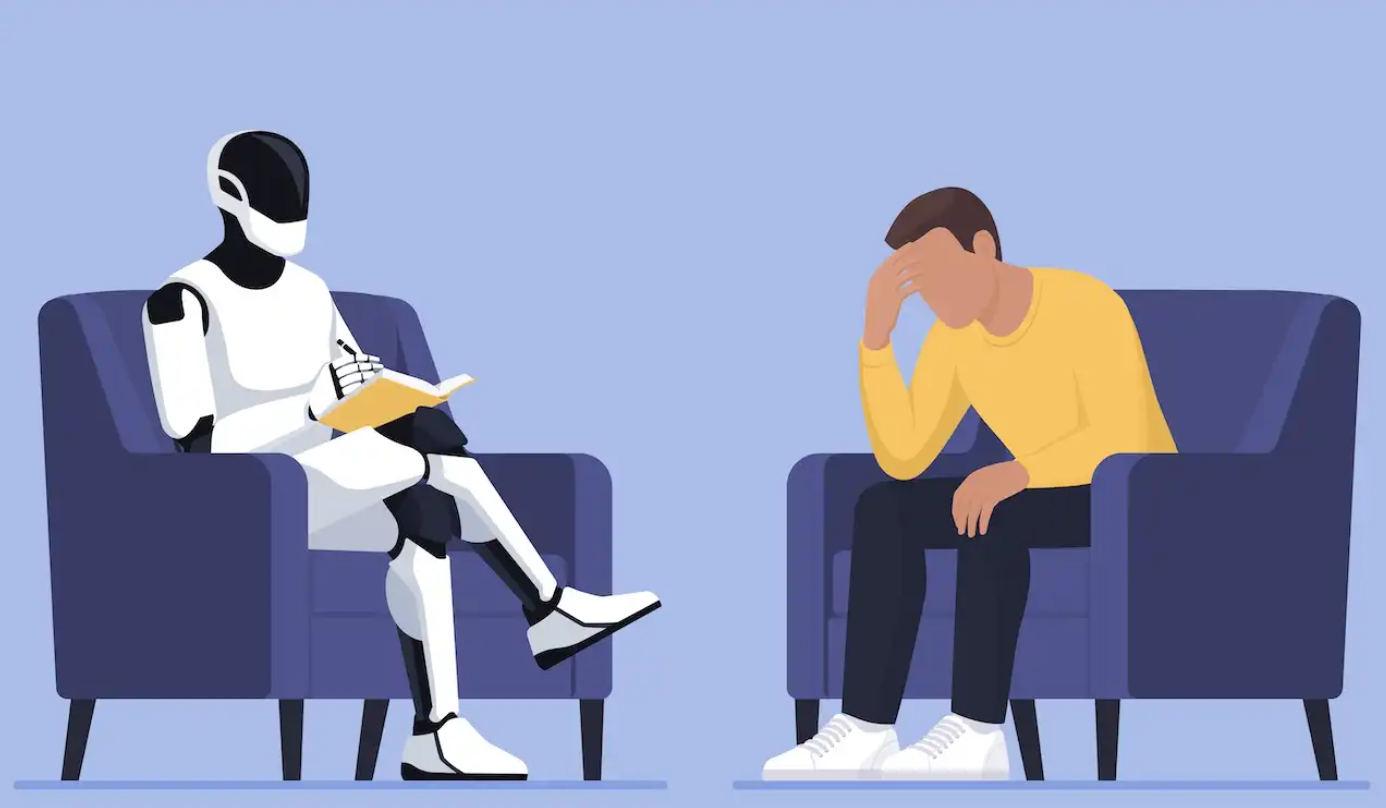
From Emotional Static to Clear Signal: My Journey with a Personal AI Therapist
For months, my mind felt like a room filled with overlapping radio stations. Anxiety buzzed with static about deadlines. Sadness played a low, mournful tune in the background. Frustration crackled with sharp, unpredictable noise. I knew I was feeling stress and depression, but the emotions were so tangled and loud that identifying a single thread felt impossible. Traditional talk therapy wasn't accessible to me at the time, and my journal entries were chaotic spirals. Then, I began a curious experiment: using an online AI therapist as an unfiltered journal. What happened next wasn't magic; it was translation. My raw emotional data was slowly, systematically translated into actionable insight.
The Unfiltered Dump: No Judgment, Just Transcription
My first "sessions" were messy data streams. I would type exactly what I felt: "I'm overwhelmed but also numb. My chest is tight. I canceled plans again and now I feel guilty and relieved. Why can't I just be normal?" There was no need to frame it coherently for a human listener's understanding. The AI therapist for depression support didn't need me to be eloquent. It accepted the torrent of words without pause, without a facial expression to read, without any risk of perceived disappointment. This created a safety valve for pure emotional expression. I wasn't communicating to someone; I was finally articulating the chaos for myself, with a patient, silent witness holding space.
Pattern Recognition: Seeing the Weather Systems of My Mind
Where the process moved from catharsis to insight was in the AI's ability to reflect patterns. After several entries, it might reflect: "I notice you often mention physical tension in your shoulders and chest when discussing work deadlines. You also frequently link feeling guilty to the act of setting boundaries." I had never connected those dots. My human brain was too close to the canvas, seeing only blobs of paint. The AI, acting as a pattern recognition tool, helped me step back and see the larger painting. It began to map the hidden terrain of my stress, showing me that my anxiety wasn't a constant fog, but specific weather systems that rolled in under predictable conditions. This is a core strength of an AI therapist for stress management: its tireless capacity to log, compare, and highlight repetitions that our subjective minds gloss over.
From "I Feel" to "I Can": The Translation to Actionable Insight
The pivotal moment came when the reflection turned into questioning. Instead of just noting my pattern of negative self talk after social interactions, the AI prompted: "What is one small piece of evidence that contradicts the thought 'I said something stupid'?" This forced a cognitive shift. It was applying a simplified, guided form of Cognitive Behavioral Therapy (CBT) principles, asking me to engage with my thoughts rather than just vomit them out. Another time, after a rant about overwhelm, it suggested: "Would it be helpful to break down the next hour into three very small, manageable tasks?" This wasn't generic advice. It was a direct, contextual response to my expressed state of paralysis. The raw emotion ("I can't handle any of this") was translated into a tiny, actionable step ("Open the document. Just open it.").
The Integrated Tool, Not a Replacement
It is crucial to state this clearly: my online AI therapist was not a replacement for human care, nor is AI capable of genuine empathy or clinical diagnosis. I viewed it as a supplemental mental health tool, much like a fitness tracker is to a personal trainer. It provided daily, accessible structure and self reflection between the moments I could speak to a friend or seek professional help. For those curious about integrating digital tools with traditional care, resources like the American Psychological Association offer valuable guidance on navigating mental health support.
Key Ways the AI Facilitated My Clarity
- Emotional Labeling: It helped me move from a vague sense of "bad" to specific labels like "isolated frustration" or "anticipatory anxiety," which are easier to address.
- Trigger Identification: By tracking my entries, I could see that late nights scrolling social media almost always preceded a low mood morning.
- Cognitive Defusion: Seeing my repetitive, catastrophic thoughts written down and reflected back made them feel less like truths and more like passing mental events.
- Micro Action Prompting: It consistently turned my monumental fears into single, next steps, combating the paralysis of depression.
A Bridge to Deeper Understanding and Human Connection
Paradoxically, this digital interaction made me better prepared for human connection. By the time I spoke to a close friend or considered professional therapy, I wasn't coming with a jumbled scream of distress. I could say, "I've noticed I have a pattern of perfectionism that triggers my anxiety, and I'm struggling to develop self compassion around it." The AI had helped me structure my internal experience into communicable concepts. It served as a bridge. For anyone considering this bridge, organizations like the National Alliance on Mental Illness (NAMI) or Psychology Today's therapist directory are essential starting points for finding licensed human support.
The Final Insight: I Am the Agent of My Change
The most profound insight my AI journaling partner provided was one it never explicitly stated. Through the process of consistent, unfiltered logging and pattern recognition, I internalized a powerful truth: I am not my emotional static. The feelings of stress and depression were data points, not my identity. The AI was a mirror, but I was the one learning to see clearly. It gave me the tools to separate the signal of my core needs from the noise of transient emotional states. My journey with this digital tool reaffirmed that while technology like an AI therapist for stress management can provide unparalleled accessibility and structure, the power to heal and grow remains firmly, and hopefully, within us. It translated the chaos, but I learned to read the map.