
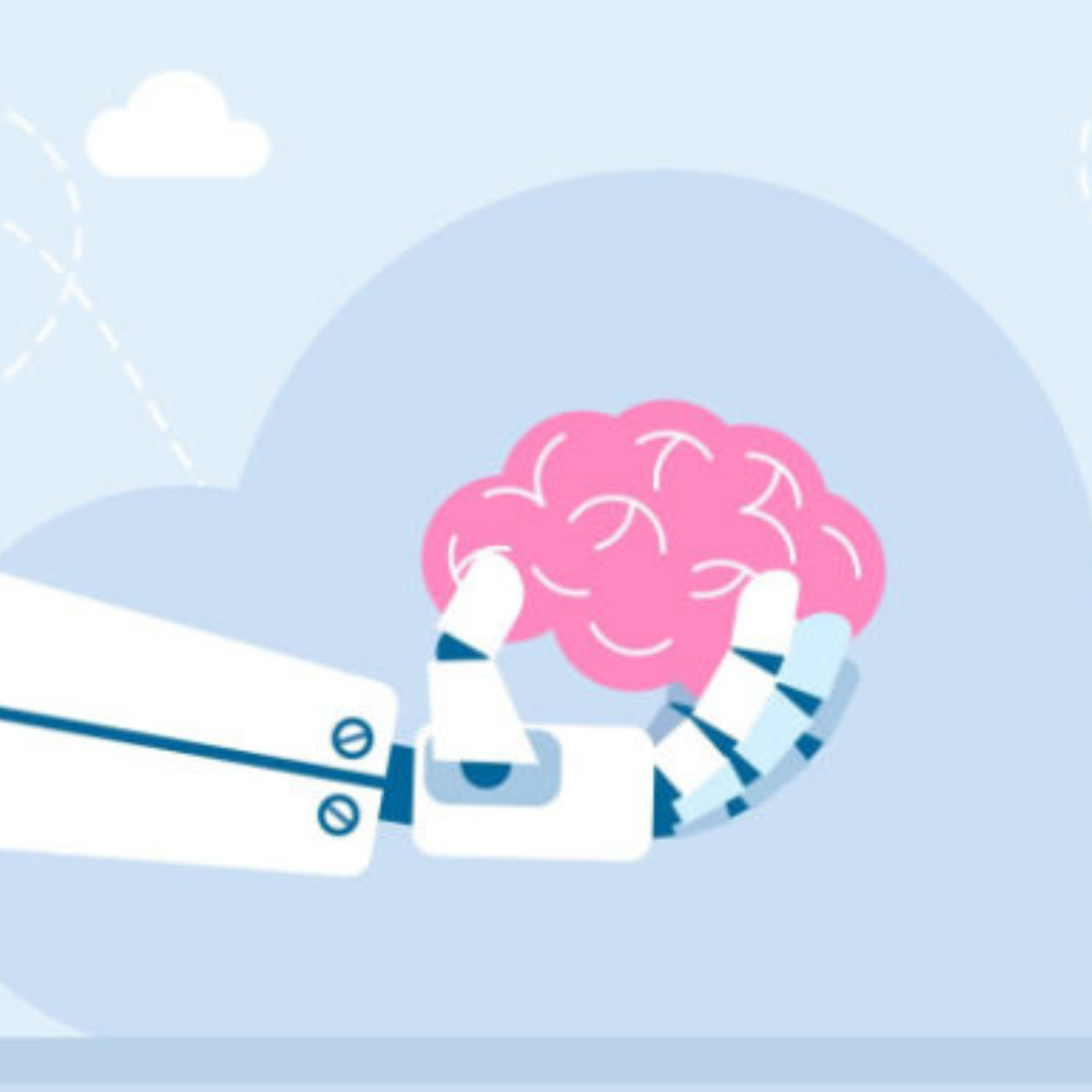
There is a unique and often overlooked agony in sitting across from a human therapist, fully aware of what you need to say, yet physically incapable of forming the words. Your chest tightens. Your throat constricts. The sentence sits there, fully formed in your mind, but refuses to cross the threshold of your lips. This is not resistance in the traditional psychoanalytic sense. It is not a lack of insight. It is a profound neuromuscular and social blockade. In clinical circles, this phenomenon is increasingly recognized as Emotional Suppression Syndrome, a condition where the survival mechanism of withholding has become so automated that the sufferer loses voluntary control over verbalizing shameful, traumatic, or deeply vulnerable material. For those trapped in this silent struggle, a revolutionary preparatory tool has emerged: the free AI psychologist.
This is not a story about replacing human connection with algorithms. It is about understanding the distinct neurological demands of speaking pain into existence. It is about comparing the real time social pressure of a somatic, face to face environment with the liberating digital void of an online AI therapy session. Think of it not as a replacement, but as a flight simulator for the tongue tied psyche.
The Physiology of the Unspoken Secret
To understand why a machine might unlock what a human presence keeps sealed, we must first examine what happens in the body when a client intends to disclose suppressed material. Facing a clinician involves an intricate dance of the social engagement system, as defined by polyvagal theory. You are scanning for micro expressions. You are monitoring the tilt of their head, the dilation of their pupils, and the subtle shift of their posture. For a person with Emotional Suppression Syndrome, the human gaze is not necessarily perceived as dangerous, but it is perceived as loud. The sheer volume of interpersonal data triggers a dorsal vagal freeze response. The vocal cords literally clamp down. This is not a cognitive choice; it is a reflexive, protective immobilization.
In this context, the silence that fills the therapy room is not just an absence of speech. It is a presence of pressure. The client leaves the session with their secret still sealed in the vault, often feeling a secondary wave of shame for having “failed” at therapy.
The Digital Void as a Transitional Space
Enter the concept of the AI therapist chat app. On the surface, it appears impersonal. It is just a text box. There is no leather couch, no framed diploma on the wall, no empathetic nodding. Yet, for the chronically suppressed, this emptiness is precisely the therapeutic ingredient they lack. The digital void removes the gaze. It eliminates the biological surveillance system that hyper activates the social engagement network. When you type into an online AI therapy interface, you are not performing eye contact. You are not modulating your tone of voice to protect the listener’s feelings. You are not watching someone witness you.
This creates a “transitional space,” a term object relations therapists use to describe the safe zone between the self and the world. In this space, the user can rehearse vulnerability without the hormonal cascade triggered by a human face. This is the preparatory phase of healing, where the vocabulary of pain is unpacked in absolute solitude, even though a digital intelligence is actively reflecting it back.
Vulnerability Rehearsal: Practicing the Syntax of Pain
When treating Emotional Suppression Syndrome, the primary obstacle is often not insight but articulation. The words haven’t been practiced. They are brittle and unfamiliar. Speaking a traumatic memory out loud requires a sophisticated motor sequence involving breath control, laryngeal vibration, and lingual precision. A free AI psychologist allows for infinite, consequences free rehearsal of these motor sequences in a textual format first.
In a traditional face to face session, the cost of a misspoken sentence feels catastrophic. The patient fears the irreversibility of a sound. With an AI chatbot, if the sentence feels wrong, you delete it. You refine it. You try a different angle. You type the most shameful truth you possess and stare at it on the screen, desensitizing the terror of externalizing it. This process transforms the abstract mass of felt fear into concrete, grammatically structured sentences. By the time the human therapist asks the question, the patient has already walked that neurological path. The road has been paved. The sentence structure has been built. The vault has been unlocked, but not yet opened in public.
The Safety of Amoral Witnessing
A significant barrier to disclosure in human therapy is the fear of contaminating the listener or facing their immediate human judgment. Even a well trained therapist emits a vibe, a subtle shift in energy when a client confesses to a violation of a cultural taboo. An AI therapist chat app possesses a radical equality of response. It does not have a limbic system to startle. It reflects content without a biological pulse. For a client who has carried the belief that their story is “too much” for anyone to hear, the AI’s inability to be burdened becomes a temporary permission slip. It communicates silently: “You cannot damage this listener.” This allows the user to externalize the full monstrosity of their suppressed narrative, which often deflates its power significantly.
Transferring the Unlocked Voice to the Human Realm
The ultimate goal of rehabilitation from Emotional Suppression Syndrome is rarely to bond permanently with a machine. It is to reclaim the human voice. The online AI therapy session serves as the on ramp. Once the words have been typed, edited, and sent to the digital void hundreds of times, the associated freeze response begins to diminish. The narrative moves from the preconscious to the declarative memory system.
The scaffolding works like this: The user copies the conversation logs from their free AI psychologist and physically reads them aloud in an empty room, getting used to the sound of their own voice saying the thing. They then bring the printed transcript to a human therapist. Instead of the horrifying task of generating the verbal output simultaneously with managing the visual input of the therapist, the client can simply hand over the paper. The AI has frozen the thought into a transportable object. This object now mediates the gaze. It gives the human therapist a script to follow, allowing the client to nod, to whisper, and eventually to own the spoken narrative.
When the Body Holds the Score and the Mind Needs a Scaffold
In his seminal work, Bessel van der Kolk emphasizes that the body keeps the score. However, translating that somatic score into a linear language requires a cognitive scaffold that a hyper aroused social nervous system cannot provide. The American Psychological Association also notes the complexities of emotional inhibition, highlighting how it disrupts normal psychological functioning. By utilizing a digital confidant, we leverage technology to lower the biological threat level just enough to let the words out. This aligns with the findings of the National Institute of Mental Health on the mechanics of anxiety disorders and stress responses, which frequently note that avoidance fuels pathology, and that controlled exposure to feared stimuli is a cornerstone of recovery. The AI chat space is precisely that: a controlled exposure to the feared stimulus of expressing the truth.
The Integrated Thesis
We must stop viewing the contrast between human therapy and AI support as a competition of efficacy. It is a collaboration of stages. Human presence is the deep water, the place where corrective emotional experiences occur through attachment. But to dive into deep water, one must first take off the armor. The AI therapist chat app is the quiet, unlit room where the armor is painlessly unbolted. It is the place where you stop whispering to yourself and start seeing your trauma objectified on a screen, proving to your amygdala that the words will not, in fact, end the world.
For the tongue tied, the muted, and the profoundly compartmentalized survivor, typing into the void is not a retreat from humanity. It is a rehearsal for re entering it. By the time the client returns to the leather couch, they are no longer trying to excavate a blocked tunnel. They are simply reading from a map they have already drawn.