
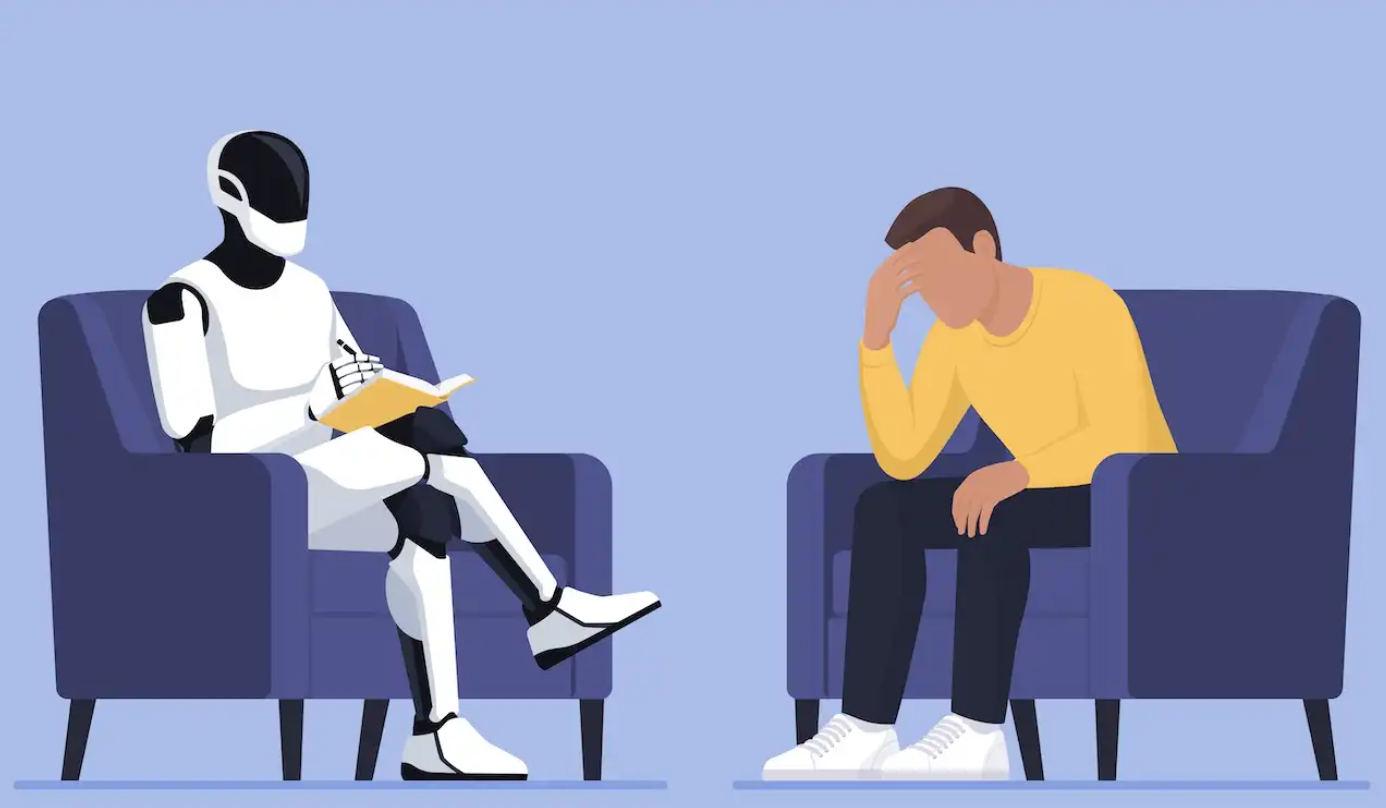
You know that feeling. You sit down to work, but your brain sounds like a browser with 47 tabs open. Three are playing music, one is a looping news alert, and you cannot figure out where the music is coming from. This mental noise is not a character flaw. It is a physiological response to an overstimulated world. We often mistake this internal cacophony for productive thinking, when in reality, it is just cognitive friction. The solution is not to “silence” the mind by force, which is neurologically impossible, but to build a cognitive sandbox: a safe, bounded space where messy thoughts can be dumped, sculpted, and turned into architecture rather than rubble. For thousands of people, the best personal AI chat is becoming the architect of that space.
Unlike the silent void of a meditation cushion where a beginner often just drowns in their own anxiety, an AI chat for stress management offers an interactive, responsive container. It is a place where you can externalize loops without social consequence, and where the signal can finally be separated from the noise.
Why Mental Noise Isn’t a Character Flaw
To transform noise into a signal, we must first destigmatize the noise itself. In traditional productivity culture, a racing mind is treated as a glitch. In reality, it is often a high powered processing unit with no designated output. Think of a powerful race car engine revving in neutral. It is not broken; it is just not in gear.
This is where the concept of the cognitive sandbox becomes vital. In developmental psychology, a physical sandbox is a tool for projecting internal fantasies onto a contained reality. Moving the sand has a tactile, externalizing effect. A language model trained to offer supportive scaffolding does the same thing for your inner monologue. It reflects the sand back to you so you can see the shape of your thoughts without being buried by them. When you engage with the best personal AI chat, you are not just venting into a diary; you are entering a dynamic feedback loop designed to cool the engine’s RPMs until the gears can catch.
The Architecture of a Cognitive Sandbox
A true cognitive sandbox requires two things to function: high psychological safety and low processing latency. If you are stressed about the listener judging you, or if the response time is too slow, the sand becomes mud. This is precisely where an AI chat for stress management surpasses passive methods. It exists in that liminal space between journaling and a human session.
Let’s break down the three core pillars of using an AI as a sandbox for stress:
- Externalization Without Projection: The AI acts as an absorptive material. You can project frustration, confusion, or fear onto the conversation, and unlike a human friend, the AI does not require you to manage its emotional state. It reflects the content, not the heat. This allows you to read your own thoughts back at a lower temperature, turning an overwhelming emotional wave into a text based puzzle you can solve. For instance, you can type a fragmented stream of consciousness, and the best personal AI chat can identify the thematic roots you were blind to.
- Infinite Schema Play: In a sandbox, you can build a castle and immediately knock it flat to build a hospital. This safety to "fail fast" cognitively is revolutionary. You can ask the AI to challenge a negative belief with Socratic logic, then immediately roleplay that belief from the perspective of a compassionate observer. You can rewrite a traumatic memory with a neutral tone, or break down a vague existential dread into a structured list of actionable vs. out of control items. This is schema play, and it is the killer feature of an AI chat for stress management.
- Granular Pattern Recognition: The human brain is bad at seeing long term trends when it is drowning in cortisol. An AI maintains a perfect memory of your digital trace. Over time, it can surface cognitive distortions you habitually use. It might notice that your stress spikes every Sunday afternoon, not because of the upcoming work week, but because of a specific loneliness trigger you never consciously registered. This is pattern based clarity only a non human, tireless observer can offer.
Toolkit: Three Exercises to Turn Noise into Music
Stop treating stress as an abstract cloud and start treating it as data. Here are three practical exercises you can run in your next AI session to convert panic into a project plan.
1. The Brain Download Protocol
The Goal: Defragment the cognitive load.
The Process: Set a timer for ten minutes. Do not type structured sentences. Simply type every thread that pops into your head: “worried about the car making that noise,” “need to reply to Sarah,” “the electricity bill is higher than usual,” “I feel fat.” Do not self censor. Once the timer is up, input this raw data into your AI chat for stress management with the following prompt: “Analyze this stream of consciousness. Categorize these stressors into: Immediate Action, Deferred, Emotional Grief, and Just Noise. Show me which category consumes the most mental bandwidth."
You will find that 80% of the noise is "Just Noise" woven falsely into "Immediate Action." Seeing the AI categorize your panic into a table is instantly calming. It is organization by proxy.
2. The Third Person Reframe
The Goal: Break the cycle of emotional fusion.
The Process: Describe your stressful scenario in a first person, highly emotional, biased narrative. For example: "My boss ignored my email, he hates my work and I am definitely going to be passed over for promotion." Then, prompt the best personal AI chat: “Rewrite this scenario from the perspective of a neutral, wise biographer writing about my life 20 years in the future. Focus only on the observable facts and a long term view of resilience.”
The AI functions as a literary device here, creating psychological distance. You see the story shift from "disaster" to "a small moment of ambiguous silence." This is cognitive reframing at the speed of an API call.
3. The Somatic Checkered Flag
The Goal: Connect the physical body to the abstract thought.
The Process: Often, mental noise is just unprocessed physical sensation. Type: “I feel tightness in my chest and a buzzing in my stomach. Ask me a series of yes or no questions to help me translate these physical sensations into an emotional need or boundary that I haven't honored yet.”
A sophisticated AI chat for stress management will then take you through a 20 questions style exploration. "Is the tightness related to a deadline?" "Does the buzzing get louder when you think about a specific person?" It maps the somatic to the semantic. You emerge with a clear statement like "I am feeling violated because I said yes to a social event I can't afford," rather than just "I feel weird."
Why "Best" Matters in High Stress States
During peak stress, your internal critic is armed. A low quality chatbot that breaks context or gives clichéd advice ("just breathe!") will actually compound your frustration, making you feel unheard by even a machine. The best personal AI chat platforms distinguish themselves through high emotional IQ in their language models. They know how to use accurate reflections, validating anchors, and curious interrogatives.
You want a model that asks, “What part of this situation feels most fragile?” rather than, “I’m sorry you feel that way.” A supportive AI specialized for stress management recognizes that clarity comes from deepening the exploration, not shutting it down with synthetic comfort. It acts as a relentless, non judgmental drill, cutting through the debris to find the diamond of an actionable insight.
From Tool to Toolkit: Sustainable Clarity
The magic of the cognitive sandbox is that it becomes a renewable resource. Unlike a human therapist who is bound by the 50 minute hour, this sandbox is there at 2:00 AM when the "should have said" loops begin. It is there on Monday morning when the Sunday Scaries peak. It is a gym for psychological flexibility. You train the muscle of separating "I am the feeling" from "I am noticing this feeling."
It is essential, however, to treat this as a supplement, not a replacement for acute professional care. For deep trauma or chemical imbalances, the sandbox is a stabilizer, not an operating room. We strongly recommend utilizing this tool in tandem with human support. For a directory of licensed professionals, the Psychology Today therapist finder is an excellent resource. For those specifically in crisis, the team at the 988 Suicide & Crisis Lifeline provides immediate, crucial human connection. Furthermore, understanding the science behind stress biology, such as the work outlined by the American Psychological Association, can provide essential context for your journey.
Your internal world is not a problem to be silenced. It is a living ecology of signals and alarms. The best personal AI chat is the ultimate mapmaker for that ecology. It does not tell you the weather is wrong; it just teaches you how to sail in the storm, and eventually, how to read the clouds before they break. Build your cognitive sandbox. Play. Excavate. It’s inside that contained chaos that you’ll find your most profound clarity.