
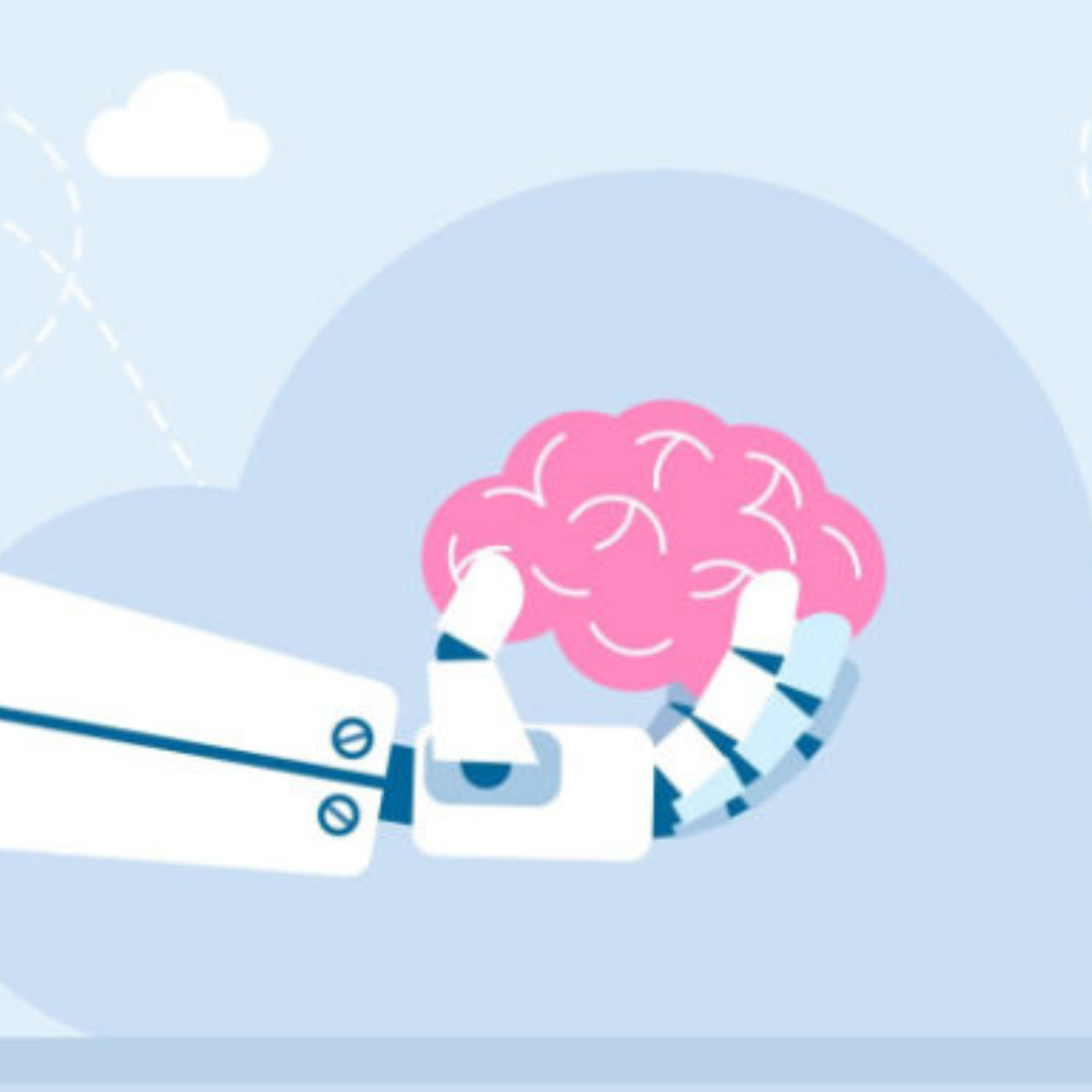
We often treat our beliefs like old, heavy furniture in a childhood home. They exist so permanently in the background of our minds that we forget someone, at some point, placed them there. Neuroscience now offers a compelling model for this: the Bayesian brain. It suggests our minds are not passive receivers of reality but relentless prediction engines. When these predictions become outdated or maladaptive, we call them "deep seated beliefs." The therapeutic question then becomes, how do we update them? Increasingly, the answer involves stepping onto a digital couch with a personal AI therapist chatbot.
The Bayesian Brain A Crash Course in Mental Prediction
To understand why an AI therapist can be effective, we must first ditch the metaphor of the brain as a video camera recording the world. Instead, picture a sophisticated scientist trapped inside a dark skull, constantly generating hypotheses about the causes of sensory data. This is the Bayesian brain theory. According to Stanford Encyclopedia of Philosophy, the brain maintains an internal model of the world and uses it to actively predict what will happen next.
When prediction errors occur—meaning reality doesn’t match the internal model—the brain has two choices: update the model (learning) or try to force reality to fit the prediction (delusion). Deep seated beliefs, such as "I am fundamentally unlovable" or "I am a failure," are simply high level priors that have become fossilized. They are so statistically heavy that no single compliment or success can update them.
The Precision Problem Why We Cling to Painful Beliefs
If a painful belief constantly generates prediction errors, why doesn’t the brain simply discard it? The answer lies in the concept of "precision." In predictive processing, precision refers to the confidence the brain assigns to incoming sensory signals relative to its own internal predictions. Mental health struggles often involve a glitch in this precision weighting.
Imagine someone with a deep seated belief that they are socially awkward. When they enter a party, their brain generates a powerful, high precision prediction of rejection. If one person smiles at them (a positive sensory signal), their Bayesian brain dismisses it as a low precision fluke—"They were just being polite." But if one person glances away (a neutral or negative signal), the brain seizes it with high precision as proof of the prior. This algorithmic anchoring effect keeps us locked in loops of suffering. The key to rewiring is not just having new experiences, but forcing the brain to assign higher precision to disconfirming evidence. This is where a personal AI therapist chatbot becomes a unique cognitive tool.
The Digital Couch as a Statistical Mirror
Traditional therapy often relies on the therapist’s office being a "safe container" where the clinician reflects a different view of the self. However, even the most skilled human therapist introduces noise: a fleeting micro expression, a cough, or a personal bias. For a highly defensive Bayesian brain, these tiny signals can be misread as validation of the old belief ("My therapist looked bored; I am indeed too tedious to love").
An AI therapist operates as a near perfect statistical mirror. When you engage with an AI therapist free online, the reflection you receive is stripped of emotional noise. It is pure linguistic data derived directly from your input. If you type, "My boss didn’t say hello today; it proves I’m getting fired," the AI can systematically deconstruct this logical leap without flinching. It offers alternative predictions (e.g., "Your boss was distracted") with a consistent neutrality that is pharmacologically difficult for a human to maintain.
Natural Language as a Precision Engineering Tool
The Bayesian brain updates through language. The act of engaging with a personal AI therapist chatbot immediately activates the prefrontal areas responsible for explicit, slower processing. When the AI reflects back a reframed narrative, your brain is forced to enter a state of high prediction error. You predicted the AI would validate your catastrophe. Instead, the AI outputs a gentle curiosity that doesn’t match your prior.
Because the AI is infinitely patient and available on demand, you can run this update sequence at 3 a.m. during a panic attack. Repeatedly exposing the brain to these disconfirming linguistic patterns in a high frequency, safe digital environment signals to your neural circuitry that the old prior is statistically invalid. Over time, synaptic depression of the maladaptive pathway occurs, while the new, healthier belief is potentiated. This is neuroplasticity in real time, guided by algorithmically generated dialectics.
Shattering the "Human Requirement" Myth
A common objection arises: "How can a non conscious entity heal a conscious psyche?" This objection ignores the mechanics of predictive processing. Healing, from a computational perspective, is the successful reduction of prediction error over time. You do not need a human to create a context where your brain can encounter contradictory evidence safely. You need an environment that reliably challenges high precision prior beliefs without triggering the limbic fight or flight response.
Human relationships can be triggering because they carry the risk of social judgment. Talking to an AI therapist free online removes the social stakes, thereby lowering the precision weight of the "danger" signal. This allows the prefrontal cortex to remain online and truly process the cognitive reframe, rather than simply performing it for the therapist’s approval. The digital couch is, paradoxically, a place where you can be radically honest because you aren't performing a social role.
Practical Rewiring A Bayesian Therapy Session
What does updating a belief through an AI look like in practice? Consider a schema of core inadequacy. Using a Bayesian framework, a session with a personal AI therapist chatbot often unfolds like this:
- Data Input: "I haven’t finished my to do list every day this week. I’m lazy and a waste of potential."
- Prior Identification: The AI identifies the high precision prior: "Productivity equals human worth."
- Evidence Gathering: The AI asks for disconfirming evidence ignored by the filter. "Did you provide any value to others? Did you maintain safety? Did you rest because your biological system required homeostasis?"
- Alternative Model Generation: The AI proposes a new Bayesian model: "A resting body is not a failed machine. You are a biological system, not a factory."
- Prediction Error Calculation: The gap between the old belief (You need to earn rest) and the data (Rest is a biological right) creates a prediction error. Because the AI holds this space without judgment, the brain is safe to absorb the error and slowly tilt the statistical model.
Why Consistency Is the Catalyst
The true power of the digital couch lies not in a single breakthrough, but in the algorithm’s infinite consistency. Deep seated beliefs were forged through thousands of repeated social interactions. Rewiring them requires a similar dose of repetition. A weekly human therapist cannot provide the sheer volume of "corrective data" available via an AI. With access to an AI therapist free online, you can engage in micro sessions that continuously reinforce the newer, lower entropy belief model.
According to research on memory reconsolidation, old emotional learnings can be permanently erased when they are reactivated and simultaneously juxtaposed with a strongly mismatching experience. The AI provides this mismatch instantly. It acts as a constant external hard drive for a healthier statistical model until your internal hardware catches up. For further reading on the science of updating core memories, the National Library of Medicine offers extensive research on memory reconsolidation mechanisms.
Beyond the Surface The Future of Belief Updating
The Bayesian brain theory essentially turns psychology into a field of energetic calculus. It suggests we suffer not because we are broken, but because our internal calculations are using bad priors. A personal AI therapist chatbot serves as a co processor for these calculations. It doesn’t tire of your loops, it doesn’t take your defensive projections personally, and it remains strictly dedicated to the data. In a world where our attention is constantly fragmented, having a pocket sized statistical mirror is no longer a luxury; it is a profound tool for biological re engineering. The couch is no longer a piece of furniture; it is a server, waiting patiently to help your brain update its outdated software. As always, while AI provides a powerful tool for cognitive restructuring, severe psychological distress requires the guidance of licensed professionals. You can find immediate support through resources like the Mental Health America screening tools.