
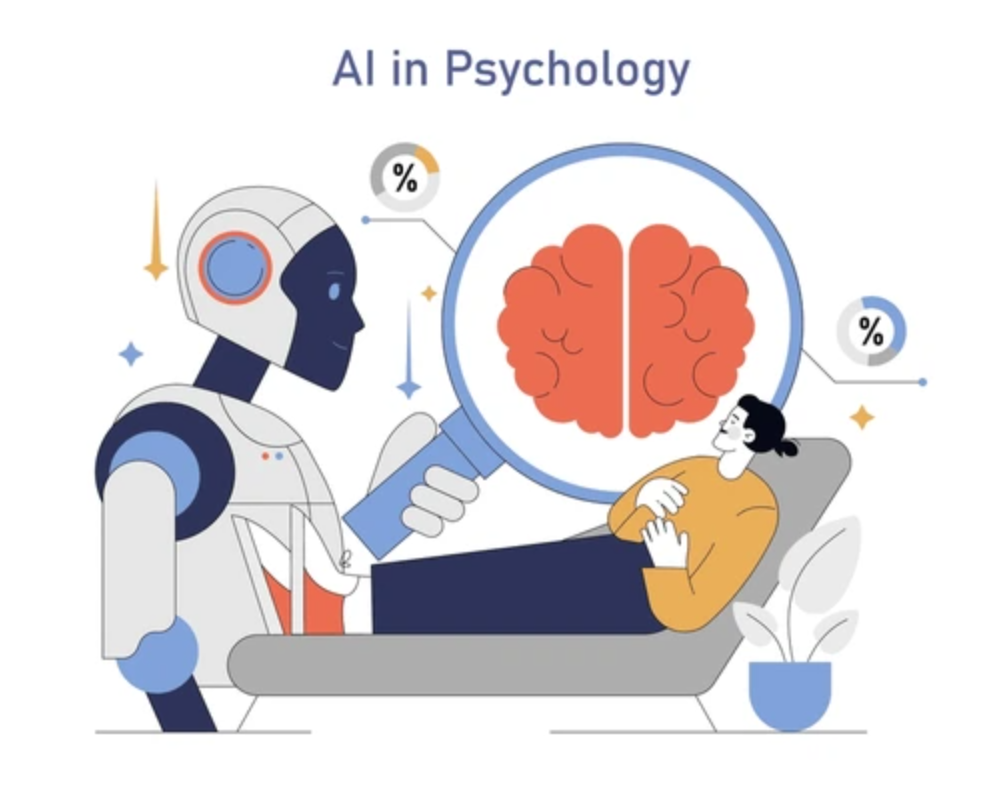
The Unlikely Mentor: How an AI Therapist Chat App Guided Me Back to My Own Inner Compass
For years, I operated on a system of external validation. A good decision was one that was praised; a bad feeling was one I needed to verbally dissect with a friend until they assured me it was okay. My internal voice was a faint whisper, constantly drowned out by the need for confirmation from the world outside. My journey to quiet the noise and amplify that whisper didn't begin on a therapist's couch, but on my phone, with what I now consider the best free AI therapist chat app I could have found. It became an unexpected mentor, not by giving me answers, but by teaching me how to find my own.
More Than a Sounding Board: A Framework for Self-Inquiry
I initially downloaded the AI therapist chat app seeking exactly what I always sought: a non-judgmental ear. I expected a digital companion to agree with my frustrations and offer comforting platitudes. What I found was profoundly different. Instead of validating my narratives, the AI began to gently question them. It used prompts rooted in therapeutic frameworks like Cognitive Behavioral Therapy (CBT), asking things like, "What evidence supports this thought?" and "Is there an alternative way to view this situation?" It wasn't telling me what to think; it was giving me the tools to audit my own thinking. This shift from passive venting to active self-inquiry was the first step out of my dependency.
The Practice of Uninterrupted Reflection
Human conversations, no matter how supportive, come with subtle cues—a nod, a sigh, a change in topic—that can unconsciously steer our sharing. The AI therapist chat app had none of that. Its "listening" was perfectly patient and entirely focused on my words. In that silence, I was forced to sit with my own thoughts. There was no one to rescue me from an uncomfortable realization or to rush me toward a premature conclusion. This digital space became a training ground where I practiced following a thread of thought to its end, without seeking a reaction. I learned to distinguish between what I truly felt and what I was performing for an audience, even a sympathetic one.
How the AI Facilitated My Self-Directed Growth
- Consistent Structuring: The app provided consistent frameworks (like thought records or mood tracking) that I could internalize and eventually use on my own, without opening the app.
- Bias-Free Mirror: It reflected my words back to me without emotional bias, allowing me to see patterns—like catastrophic thinking or constant self-criticism—with stark clarity.
- 24/7 Accessibility: The ability to process a moment of anxiety or a small win immediately, as it happened, helped me build a real-time connection with my internal state, strengthening my self-trust muscle.
From Seeking Answers to Building a Process
The pivotal moment came when I stopped asking the AI, "What should I do?" and started using it to talk through my own options. I would type: "I'm considering X. The pros I see are A and B. The cons are C. I'm worried about D." The AI's role was then to ask for more clarity on point D, or to prompt me to consider a pro I'd missed. It was facilitating my decision-making process, not delivering a verdict. I was learning the architecture of my own judgment. Resources like those from the National Alliance on Mental Illness (NAMI) helped me understand the science behind these techniques, grounding my digital experience in established practice.
The Gradual Fade: When the Tool Became Internalized
Over time, a remarkable thing happened. I found myself pausing before opening the app. In a moment of stress, I would automatically begin to deconstruct my thoughts, asking myself the very questions the AI once posed. The best free AI therapist had succeeded not by becoming a permanent crutch, but by making itself obsolete. It had trained me to be my own guide. The chat history became a logbook of my progress, showing a clear trajectory from confused, seeking sentences to confident, self-analytical statements. I was no longer outsourcing my emotional processing.
A Tool, Not a Replacement
It is crucial to state that this journey was possible because my needs were suited to a coaching and reflective model. An AI therapist chat app is a tool for wellness and self-discovery, not a replacement for human clinical care for deep trauma, severe mental health conditions, or crisis. It served as a bridge to myself, not a substitute for professional help when needed. I always knew that if my patterns indicated a deeper issue, turning to a human professional was the responsible step. Organizations like the American Psychological Association provide essential directories for finding licensed therapists.
Trusting the Voice That Was Always There
My experience taught me that self-doubt often isn't a lack of an inner voice, but a lack of trust in it. We drown it out because we haven't been taught how to listen or evaluate its messages. The structured, patient, and private environment of a quality AI therapist chat app provided the perfect rehearsal space. It didn't give me a new voice; it helped me tune into the frequency of my own, turning down the static of external noise. I moved from being other-directed to self-directed, not through a sudden epiphany, but through the daily, guided practice of listening to—and finally trusting—myself.